It's not quite as I recalled it, but the more I watch it, the more familiar it is. As everything else, it was found on Youtube, although it was only posted three years ago. At a time when I'd given up on finding it on youtube. Then again if I
Both Joachim over at Rubbermonsterfetischim and Writer/Director of The Synthetic Man John R. Hand have mailed me links to the Nokia TV-ad I have been yearning to see once again...
Here it is in all its glory, the infamous Nokia, Black Sabbath commercial!
Rob Zombie, a musician to divide the fans and a filmmaker to
divide the fans, but always a man who pays his dues and respects to the artists
and filmmakers that inspired him on his own ventures.
The Lords of Salem is a film that like all previous Rob
Zombie pieces will divide the audiences, although this little gem will perhaps
be the one that stands high above the previous ones. There’s a potent value in
Zombie returning to his own universe and leaving remake city behind. The Lords
of Salem will become a seminal work in this director’s catalogue.
Radio Dj Heidi Hawthorne [Sheri Moon Zombie] both works and parties hard. Together
with her colleagues Herman “Whitey” Salvador [Jeff Daniel Philips] and Herman
Jackson [Ken Foree] she is part of Salem’s most popular radio show. One day a
vinyl record addressed to Heidi containing raw primitive ambience of a band
calling themselves The Lords of Salem, is delivered at the station. No press release
or explanation is given with the record, just the record in a wooden box with a
cryptic logo on the front. The sound of the record evokes strange visions and
nightmares of ancient witch trials. Before the night is over there are ghosts
lurking in the corridors of the house Heidi lives in, and the ritual is just about
to begin once again.
Zombie knows how to tell a story. If you ask me, he’s
matured into one of the greatest indie horror storytellers out of the US in a
long time. He knows that taking time to present the unique universe, establishing
characters, breathing mystery into the narrative and delivering realistic
twists and shocks are key to making it work. Neither is he a stranger to
flipping conventional roles on their heads and offering alternative angles to
the classic protagonist/antagonist roles, which gives an interesting dimension
to characters. As said, Rob Zombie plays for keeps and he’s building up quite a
catalogue of work in the last few years.
Right off the bat, Zombie sticks it to us with two short but
important presentations (well three if you count the initial shots of Heidi
driving to work) as Reverend Jonathan Hawthorn [Andrew Prine] puts ink to paper
swearing that he’ll spend the rest of eternity destroying all who pledge a
legion to Satan. Cut to Margret Morgen [Meg Foster] and her coven of Six. They
chant, hail the unholy father and prepare to desecrate their false bodies…
slipping out of their tattered robes they dance round the fire, scream
hysterically and rub the dry hot soil against their aged naked bodies. A tone
is set that is almost hypnotic. Hypnotic and uncanny and I’d go as far as
saying that this is the initial attack, because the movie can be seen as being
about the several hundred year battle between Margret Morgen and reverend
Jonathan Hawthorn more than it’s about Heidi, after all their arc is one that
spans decades and only now is the time right for the witches to take their
revenge…
The ordinary world is set up delicately. We learn of Heidi’s
living conditions, life at work, local celebrity and all that jazz. The dog is
a great way to bring realism to the presentation of Heidi. When she tells him
to get down off the table it’s obvious that Zombie has a vision for this
character, and she’s not just a sloppy slacker but also someone who has some
integrity, and holds some rules about things. A few scenes later he adds some
dimension to the character when she goes to a Narcotics Anonymous meeting- Although if she really was trying to stay
away from drugs, she’d probably want to stay away from the booze too…
But with this paradox there’s also an opening to interpret
the film as nothing more than Heidi’s decent into madness… the horror may well
just be imagined. For all we know the nightmares and visions may just as well
be hallucinations from drugs, the witches’ figments of Heidi’s imagination and
the finale a simple orgasmic death splutter.
The uncanny seeps in delicately in a great scene somewhat
reminiscent of J-Horror storytelling… the threat of the piece is already in the
room but as Heidi never reacts to it, it becomes more of a threat to the
audience than the protagonist. It kind of plays along the line of Hitchcock’s
classic “bomb under the table” trait where the audience knows of a threat that
the victim is oblivious to – tensions builds! Room 5 is also important to
establishing the threat. Strange noises, strange sights and odd events that we
see and experience with Heidi, are dismissed when Landlady Lacy [Judy Geeson]
tells her that there is nobody living in Room 5.From that moment all it takes is a single
shot of the corridor leading towards Room 5 to threaten the audience.
Subplots to be found come in the shape of co-worker Salvador
who acts as something of a helper and a weak love interest, and historian
Francis Matthias [Bruce Davison] who in contemporary times investigates the arc
of Reverend Hawthorne and Margaret Morgan bringing important backstory to the
story. His investigation brings a framework to the film from which the legacy
of The Lords builds off. Ok so with all this in place we need an inciting
incident. When the strange record of pagan ambience is delivered
to Heidi, the real horror starts. AS the music taps into her subconscious, the
decent starts – just as one can presume that the listening women also are snared
up by the guttural sounds that the The Lords vinyl evokes. An enchantment
hidden away in the audio and that’s what brings all the Witches into the final climactic
reveal at the theatre.
It's great fun to see how Zombie uses and blends his
influences to come up with some really effective tricks – and the Black Metal
beat is awesome and who doesn't love a La maschera del demoino (Black Sunday) reference. Mixing stuff like The Shining, The Devils, Suspiria and a fair
deal of Carpenter, Cronenberg and Michael Winner’s underestimated The Sentinel.
You could add any number of alternative European psychotronic flicks could be
added to the list of possible influences, as Zombie has, on record, stated that
he finds European genre of the 60-80’s to be more open minded and freaky.
The subplot with the mystic audio that Heidi is given is
great, if not genius. Not only a haunting chant, but also a gateway into the
flashbacks portraying the Witches’ coven fronted by Morgan as they chant and
meet their deaths at the hands of Hawthorne’s team of executioners. A fine
detail that’s presented is also that the audio affects other women in the town.
There’s a montage that show’s how other women are affected by the audio and in
an extension of that I’d also imagine that they too start to have
hallucinations and vision similar to that of Heidi. This due to the sound waves
of the primitive chants that evoke something hidden away dormant within the
women of Salem for decades. And when on the topic of audio, I don’t think
anyone’s actually used the dynamics of audio in the same way since Dario
Argento screamed his noise performance with Goblin at the images of Suspiria.
Holy Crap does Zombie and his sound designers hammer this baby down hard, going
from deep rumblings drones to high pitch screamed dialogue. It’s fantastic and
I really love what Zombie and John 5 have done with the audio.
Let’s talk about cast. So many times do genre directors get
great stars of the past to do a bit part where they just walk on and off. Just
enough to wet the appetites of genre gourmands, giving them the opportunity to
go, Oh look there’s so and so… Now Zombie does this too, and part of the hype
built up beforehand was the massive list of former genre actors who where going
to be part of this project. Some have gone missing completely (one can only
hope for a special edition at some point so that we get to see Udo Kier - who starred in Michael Armstrong's seminal witch hunter movieThe Mark of the Devilvery early in his career, Clint
Howard, Camille Keaton and the late Richard Lynch’s scenes). It is great to see
Ken Foree work his magic, as it is the brief cameos of cult icons like Sid Haig
and Michael Berryman. But the absolute delight - and possibly a huge part in
why this film is sooo tainted with eighties horror atmosphere - is the coven of
Witches. Judy Geeson, Patricia Quinn and Dee Wallace as you’d never expect to
see them. Not forgetting Meg Foster. Holy screaming crap, that’s one creepy
witch indeed and I’m totally sticking this performance as one of the greatest eerie
antagonists in a long time.
It’s obvious that The Lords of Salem is a personal film.
It’s also very obvious that this is a movie done in the precise way Rob Zombie
wanted it to be made, and that can only be applauded – if nothing else it’s a
rather delightful and somewhat unique little film he’s come up with. It has
some great shocks, some awesome visuals a couple of delightful mind expanding
moments and definitely tells a seductive and sinister story. The only bone I
have to pick is the way Zombie tells stuff during the end credits that I’d have
loved to see in a closing scene. I find that this would have taken the edge off
the Psychedelic dreamy rock video montage that climaxes the movie and wrapped
it up more in a conventional fashion. I dig the ending, but at the same time I
find that spending so much time to establish the ordinary world, characters and
the pending threat, I feel kind of snubbed when it finally comes – even if
paint FX, nineties music video aesthetics and vector based CGI images may just
become the next retro cool way to go!
The Lords of Salem is a rockin’ rollin’ flirt with witches,
satanic cults and the fever dream genre moods of EuroGoth and classic old school horror! Rob Zombie
has matured into a great filmmaker and a force to rely on.
The Lords of Salem is evoked on Swedish DVD ad Bluray
release on the 17th of July!
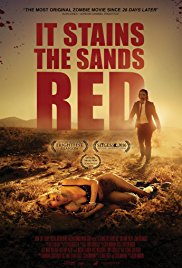
What’s up with all kids in US horror being recovering
junkies these days? Ok, never mind, here we go and let’s start out with a quick
fix to establish characters and stuff. Mia [Jane Levy] and her friends have
gathered at the cabin in the woods to help her kick her dirty drug habit. Her
alienated brother David [Shiloh Fernandez] swears never to leave her and they
all start their happy quest to help Mia go cold turkey.Briefly into detox Mia starts to seriously
complain about the foul stench and hey presto they find a trap door leading
into the basement. Eric [Lou Taylor Pucci] and David venture into the hole
whilst nurse Olivia [Jessica Lucas] and Natalie [Elizabeth Blackmore] await
upstairs with Mia. Downstairs in the murky dark cellar the two chaps find not
only the remains of loads of gutted and stung up cat carcases, but also a book
wrapped tight in a black plastic bag and barbedwire. Guess what it is?Ok, we don’t really need to take it any further
than that. It’s Evil Dead, you know it – or should know it by heart. From that
point on some serious demonic possession kicks ass, goo and gore splash all
across the screen and the audience is left breathless at the end of the
ninety-one minute run.
In the pre-build to watching this new Evil Dead film I re-watched
the original. Yeah, I know, possibly something of a bad move before seeing a
remake, but I have always recalled Sam Raimi’sThe Evil Dead films as more horror
comedy than horror scary, and during the course of all the interviews I’ve
conducted with filmmakers last year, a majority claim that Sam Raimi’s The Evil
Dead was the movie that made them want to get into filmmaking. So I had to
watch it, and Oh boy has time deceived me. The original film was certainly much
grimmer than I remembered it and suddenly all those censored versions made
sense… where I’ve previously said, “What the heck is there to censor in The
Evil Dead?” I now went, “Whoa, no bloody wonder this thing had problems getting
through the censors!”
With that in mind, I stepped into the preview of Fede Alvarez
take on Sam Raimi’sThe Evil Dead… the one that proudly has boasted that’ it’s
cutting the comedy and going straight for the kill in one of this years
supposed best horror films.
True, it does go straight for the kill. Even before the
opening credits we are presented to a grim initial attack that even in its
short form plays with what to expect. Then again, we’re all fans of the
original, so we know what to expect. Roll the credits, send in the new flesh.
Filmmakers are getting better at playing off audiences empathy for characters
the Fede Alvarez/Rodo Sayagues screenplay (based on Sam Raimi’s motion picture,
The Evil Dead) manage to win a few points with a family torn apart, mother with
history of mental illness, sister with drug habit, brother with abandonment
issues subplots hidden away in the backstories. Oh, and the horror genre’s BFF,
Guilt, is very present too. David has some heavy guilt issues that make him go
to some grueling lengths to rid himself of that guilt of haunts past. Although
despite this I’d say that there’s not really an Ash protagonist to cling onto…
which may be something of a problem. There are two, three very obvious
characters to cheer for, and a last minute switch which shouldn’t work but does
work that gives a final grab tight to the armrests of the chair in the dark
when the shit hits the fan kind of character… but it’s not as familiar or close
to us as Ash.I need a person to
identify with to make it an investable journey. Hell, that’s why Ash is such a
cult icon. We could identify with him in all his klutziness.
There are several nods to the original film, sometimes as
lines of dialogue reused in a kind of new context, sometimes in pure visuals
and yeah, someone on the production had the great taste to include a 1973
Oldmobile Delta 88. Nice one! The movie blasts forth without leaving much space
to catch your breath and the film is a gritty, raw, adrenaline rush of a movie.
And I guess they where right to some extent, this is possibly the most fun you
can have being freaked out in a dark cinema so far this year!
But now for the tricky stuff…It’s Evil Dead, the third out of four films
that more or less plays along the exact same beats as the original two, so I
know pretty much what is going to go down. Sometimes remakes become
checklists of what they used from the original and what they didn’t. Sometimes
they check the list off perfectly sometimes they miss key moments. Almost all
the classic moments are here but in new guises. Oh, something great is that
Alvarez never even bothered to talk cellphones. There’s never any discussion
and we never have to reach that awfully insulting “Oh no coverage” moment.
That’s worth a lot for me.
Ok, Effects, well hell yeah it’s an Evil Dead movie there
has to be special effects, loads and loads of outlandish special effects and
they deliver en masse.The only problem
I really have is that the possessed have become so god-damned mainstream that all possessed look the same!
Remember the first time you saw The Evil Dead or Evil Dead 2 or Army of
Darkness and just how impressed – or freaked out - you where with how the
possessed looked! Well to be honest all that originality has become convention.
The possessed – despite succeeding in freaking out the audience – in Evil Dead
look like the possessed in every possessed film for the past couple of years.
Hell I’ve even seen chicks as horror conventions sport the exact same look,
even the possessed in Swedish “evil deadish” flick Wither that hits cinemas
after the summer look like this! So I was kind of bummed by that, and then
there’s a real REAL huge curveball tossed at full speed into the face of the
audience during the last act that actually kind of lost me. It yanked me
completely out of the movie - let me explain. Back in the day, we could watch
horror, extreme horror and all that kind of stuff because it was at the same
time pretty comedic in its exaggerated approach. Anything could happen and did
happen, and things got gory and violent as hell, but it worked because it was
all kind of naïve and over the top. Remakes and genre today generally tend to
go for a more realistic approach and a darker more gloomy tone. Gone is the
comedic relief and instead there’s only hard realistic violence. So when this
moment comes around it was kind of out of place. It didn’t suit the rest of the
universe that the film had built. You’ll know the moment when it comes, and I’m sure you will
react the same… But thank the devils underground and all things sinister that
Alvarez fixes his way out of that situation by delivering what may be amongst
the most intense and blood drenched last ten minutes of a horror flick ever! It
really just goes absolutely insane and that makes up for any flaws I was thinking
of before this spectacular finale unleashes
So the short answer is Yes, despite some small flaws, Fede
Alvarez’s reworking, rebooting or whatever the hell you want to call it, Evil Dead did leave me with a big dumb grin on my face. So it
certainly works, get’s the job done, hits the right keys and proves that Fede
Alvarez isn’t messing around. He’s here to make an imprint, first with that
awesome CG Sci-Fi short, now with Evil Dead. It may not be the most terrifying
film I will ever experience as the promotional materials boast, but it
certainly is wild, ferocious, definitely hit the beats at all the right times,
has some fantastic effects, and entertained the heck out of me, and again, those
last ten minutes are so intense that they will drive you completely insane!
The Mario Bava, Black Sabbath stock footage used in that
Nokia commercial quest is moving forth…
I’ve sent emails to various marketing departments of Nokia,
but still haven’t received any replies… (Surprised?)
But through a few links I got from Joachim over at
RubberMonsterFetischismI’ve ended up
with these small pieces of info.
The webpage Busses on Screen has the following information
on the commercial:
Nokia - In a glimpse of the future, a young woman scares
herself silly watching a horror film on her mobile 'phone sitting on a Parisian
Saviem single-decker, fleet number 5833. The film is 'Black Sabbath', made by
cult Italian horror director Mario Bava in 1963.
I’ve been to this site before, and it kind of confirms that
there was such a promo, but I’d still want to find some hard facts in the shape of
stills, frame grabs or moving images that the commercial existed.
An article dated February 2002 on the RealScreen site, discusses
the hidden treasures of stock footage houses, and amongst the participants in this
piece we find Maria Marin, owner of Third Millennium Films. Later in the same
piece, her managing director William Morrow talks about their biggest sale…
Managing director William Morrow points to a $15,000 sale to
Nokia of a clip from Black Sabbath, a 1963 horror flick from Italian filmmaker
Mario Bava, for use in a European commercial. Morrow describes the clip:
"The shot is of a woman holding a candle. She pushes a door open and then
[the camera] zooms in on this hideous looking dead woman rising up, with big
bulging eyes."
Well, that kind of confirms that there was a sale, and that
there really was such a commercial. But still I want hard proof. I've obviously already written an email to Marin and Morrow to see out what they could tell me about this decade old top seller.
There are two kinds of filmmakers in this world. The kind that make films under
the illusion that it will make them rich and famous, and the kind that make them
for the want of telling a story and the sake of art. Fast forward a lifetime,
and the filmmakers wanting to be famous will become bitter, whilst the artist,
or auteur as they may be called, will be moved that we remember their work.
The Sarnos - A Life in Dirty Movies, tells the story of Joeseph and Peggy Sarno. Joe’s an old-school exploitation filmmaker with ambitions and
Peggy is his dedicated wife, actress, all-round crewmember and Cicero of this
warm document on their life together. That’s important, they where always together.
Together through it all.
We learn their dedication to their craft, from youngsters to
now, always looking for a way to make movies. Their lives spent between
apartments in New York and Sweden. Part of the film is their history; part is
current as Joe desperately tries to secure financing for making that “next
film”. As always, Peggy’s there to support him, give him advice and help make
that next film. There’s a nice moment where Peggy reads through Joe’s - kind of
sordid - script, after all there’s a difference in sexploitation in the
50-60’s, and reflects over the language the characters use, and suggests that
they use their cell phones to talk instead of calling from phone booths… after
all that’s what these modern women would do, says Peggy, lovingly bringing
contemporary times to her husbands script.
The Sarnos - A Life in Dirty Movies is a gentle and heart-warming
piece of documentary cinema. Swedish-made documentaries recently, sometimes manage to get close
to their subjects, but very few have any dimension. They may tell interesting,
linear stories, but this one has the dimension that many others lack. I’m a
total sucker for documentaries about filmmakers who never stopped chasing the
dream, no matter what path it took them through - such as defying one's own morals with the trials and ordeals this brings - and this is such a film,
seriously a fantastic documentary, This is about real people trying to do what
they believe in and their desire to be accepted as filmmakers and the qualms
along the way... all the way through their filmmaking lives. Wiktor Ericsson’s
cameras have caught this perfectly. I’d be able to recite passages of this film
that are really moving, but I won’t. This is simply one of those “Must See”
documentaries that you Must See!
There’s something completely fascinating with many of the
old sexploitation filmmakers, as so many of them have a very distinct idea of
where the line between art and smut goes. Filmmakers like Jean Rollin, Jess
Franco, Jose Mojica Marins etc. – all of them low budget filmmakers with some
great idea’s of what cinema is, and all with their very distinct style – all of
them where forced into directing pornography during their careers. Something
that lay heavy shadows on their artistic intentions, and the majority of them
dealt with some serious frustrations over being forced into areas of filmmaking
that weren’t where they wanted to go. But they had to, all for the sake of
getting a shot at making that next film.
Sarno is referred to as the Ingmar Bergman of 42nd Street
and that’s wonderful words to remember him by. Because what made Joe Sarno’s
films stand out amongst others in the niche depended on two facts. The way he
wrote his characters, with depth and dimension, the way he always focused on
female sexuality and the fact that his films often used the scenes of sex to
make his audience think about difficult subject matters… guilt being one of
them! Guilt for one’s own sexuality is a pretty heavy topic to drop into a
sexploitation film, but that’s precisely where Sarno’s balance lied, tell a
story, make them think, even if it’s under the guise of sexploitation… until
hardcore cinema ruined everything for Joe and so many other grand masters of exploitation
cinema.
Interview snippets with a teary eyed Joe saying things like
“I thought that everyone had forgotten about me…” as we follow the couple to
retrospectives of his work, together with Peggy’s telling of how their love was
never really accepted by her family… and definitely not the films they where
making, all add up to make a very emotional film. One can’t but sit and wonder
if Sarno had left a legacy of the same importance if he had managed to break
into accepted cinema? There’s a bitter sweet conflict within the reality that
some directors would never have been remembered if they had broken through into
mainstream, and in their alienation only really found their art.
The main body of insight comes form interviews with Joe and
his wife Peggy. Although people like John Waters, Jamie Gillis and Annie Sprinkle,
do participate, the most interesting interviews are with film historians, film critics
and experts who give a fair and honest picture of Sarno’s films and what they
meant at the time, the imprint they will leave in cinema history. I love when experts and academics are used to reflect upon
the importance of low budget and exploitation cinema filmmakers that others
sneer snobbishly at. A big part of this film is all about being accepted.
Accepting Joe Sarno as the filmmaker with ambitions that he really was. A
topic Peggy and Joe Sarno obviously had to deal with all their lives. The
closing scene is poetic justice at it’s finest.
Yes, I know that Sarno is responsible for one of the most
famous Swedish pop-cultural adult films of all time. Everyone refers to “that
film” at some point or other. But that’s not what this film is about, that’s
not the Joseph W. Sarno of this documentary, and I feel that bringing that into
this piece would be disrespectful to the Sarnos, as this is a film about the
people, not what they did.
It's the climactic moment of Mario Bava's I tre volti della paura (Black Sabbath) from 1963. Apart from being a really cool movie and a truly disturbing climax to the "The Drop of Water" segment, it is also something of an obsession of mine.
Sometime in the late 90's, it may even have been early 2000's, there was a TV commercial that used this same scene in their promo. The commercial went something like this; A woman, a young woman in say her twenties, with dark brown hair, sits on a tram. It may have been a buss. She's watching something on her cell phone. Yes, on the small tiny screen of her cellphone she was watching a horror flick... The movie was Mario Bava'sThe Drop of Water from Black Sabbath. The climactic scene as the dead woman rises from her bed is shown and the young woman screams aloud on the buss. The crowd around her look at her as she smiles and shrugs her shoulders. The punchline being that now you can watch what you want, where you want.
I'm pretty sure that the commercial was for Nokia, I have some recollection of corresponding with a person at a Nokia marketing department and them trying to obtain a copy for me before they slipped back off the radar.
I've mentioned, questioned this TV Promo featuring Bava footage to several Bava experts, but none of them want anything to do with it. I find it to be extremely important in the pop-cultural department. A Mario Bava film in a cellphone commercial! How awesome isn't that? What's the story behind the promo? Who directed it, as they obviously must have had some horror film knowledge. Of all the films out there, why Mario Bava's Black Sabbath? There's no end to the questions.
I've mentioned this promo, and asked so many friends and peers in the genre sphere in Europe, as that's where I guess anyone may have seen it as it was a Euro promo - but nobody has any recollection of it either.
I will make it a personal quest to track down this promo and post it on this site when I finally find it. It has to be out there and I hope to find answers to some of the many questions I have concerning this commercial.
Obviously I'd love to hear from anyone landing here if they have any insight into this, have you seen the promo, do you know anything about it?