Showing posts with label Belgium. Show all posts

Wednesday, April 25, 2012

The Incident

The Incident
Aka: Asylum Blackout
Directed by: Alexandre Courtès
Usa/France/Belgium, 2011
Horror/Thriller, 85min

Sometimes the less you know of a movie before watching it, the better it serves you. In this world of information overload, we’re more than often already familiar with tone, theme, imagery, key shock moments and synopsis’s way before we enter the theatre, or stick that disc in the machine… Luckily for me, the brief research I did before watching The Incident was completely wrong, which set me up for a ride completely unlike the one I was prepared for.

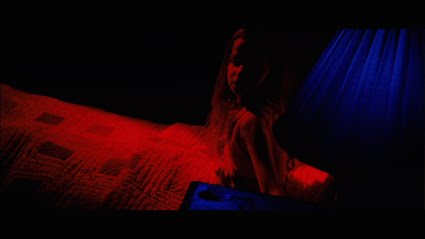
It’s the late eighties. A bunch of mates, Max [Kenny Doughty], Ricky [Joseph Kennedy] and George [Rupert Evans], who all play in the same struggling Seattle grunge band, work in the kitchen of Sands sanitarium. During a heavy thunderstorm, there’s a power shortage leaving them, wardens and patients in the dark. That’s when the inmates kick up a riot, break free and go wild… and we all know what happens when the inmates take over the asylum…
The Incident may be an English language film and give the impression of being a generic American shocker, but it's not. It's more European than anything else, and I shit you not when I constantly say that French directors are solidly on their way to taking over the cinematic world of the horror genre. The list can go on for ever; Alexandre Aja, Pascal Laugier, Xavier Gens, David Moreau & Xavier Palud, Alexandre Bustillo, Julien Maury and now one half of music video duo Alex and Martin, Alexandre Courtès, takes the step over to feature films.

I really, really, like movies that take some time to establish the ordinary world, the people who live there, their traits, give dimension to their characters and all that jazz which makes me invest in the movie. The Incident does all this, and what surprised me is that the ordinary world is already in its ordinary state pretty creepy and eerie place, thanks to that remarkable location. There are no windows on the exterior shots of the asylum, and none in the interior shots either. This creates a intimidating feeling of claustrophobia, and it also inhibits us from making a mental map of the layout, making it easier to get lost well inside the asylum.
I often talk of the transition into the unnatural or the world where the ordinary is ruptured, and the way The Incident breaks through is brilliant. When the bulletproof glass separating inmates from staff is ripped out of it’s frame presenting the psychos with a free passage to the “other side” of the border/glass, you know there’s going to be trouble. A point of no return that makes an impression, and it does so through some very smart moves, and well-written script and timing. Hiding in the safety of the kitchen as the inmates hammer at the glass with rods, chairs and even a shelf, Max asks George for some reassurance that the inmates “cant break that window right?” Before George even has time to think about his reply the force of the inmates pushes the glass out of it’s frame and they now access the whole sanitarium. The actual border of “their side” and “our side” between patients and staff acts as a clear set of rules by which the asylum is controlled. As soon as rules are set in genre cinema we can break them, and the show can get on the road.
But why don’t they just get up and get the hell out one may ask. S. Craig Zahler’s script deals with that in two interesting ways, the first being the obvious, the power is out. But convention tells us that power shortages can always be overcome, back up generators, torches and lights or even lack of logic that makes broken stuff suddenly work. Well here it’s definitely off, there’s even a scene where head officer, J.B. [Dave Legeno] explains to the cooks what’s happened and why they simply can’t fix it. Not only the lights, but also the automated doors and the system that keep thing tightly locked. Then there’s the second interesting thing that the script does to the protagonist George… He’s been at the asylum since five in the morning, he played a gig the night before, there’s been earlier dialogue about the fact that they drink beers before and after shows, so with this in mind, on the day of the power shortage, we know that George is hung-over (shown in the weird imagery as he takes a shower that morning) he’s most likely suffering from lack of sleep, which will have effects on endurance (sloppy when packing up the delivery) his psychic state (snaps at Max during the serving of lunch) and physical state (is overrun by inmates several times during the walk back to lockdown). Weakening the protagonist is a move of genius, and that’s exactly what that late gig, early morning, lack of sleep trick is all about.
Establishing the threat! There’s something about Welsh actor Richard Brake’s stare that get’s under your skin. From his first scene and the way Laurent Tangy’s camera lingers on his face, there’s something sinister and unnerving in that stare, and this is used to perfection in The Incident. Slowly the Harry character is introduced. At first it’s merely the way he stares as George as he stands in line for his dinner. This escalates as he encourages other inmates to “spit out the meds”, and when all hell breaks loose, we can completely see why George choses Henry Green as his antagonist. The face-to-face confrontation that their “struggle” finally culminates in is an uncomfortable one as it doesn’t quiet play out as we are accustomed to. But it works, and it creates a creepy emotional state that the movie plays with in its final act. It sends shivers down my spine when genre breaks convention and goes elsewhere to explore other areas. I find that The Incident several times shows me one thing, but offers several possible interpretations... stuff that makes you go back to movies.
Darkness and lack of light play a huge part of The Incident. Together with the lack of orientation, the darkness adds to the above-mentioned claustrophobia. It also helps build tension, as we never really know who’s out there, behind us or even worse, right in front of us. The Incident uses the murky lighting, the shady corners and the blackness of adjacent corridors to have figures lurking in the dark. With the use of strange noises, incoherent patient dialogue and mad laughter, the audience never know what kind of attack, or who will pounce at them next, the tension builds and anxiety sets in.

Have you noticed that most of these French genre pieces clock in just below ninety minutes? Feel the pacing of the movies, and you will realize that there’s never a slow moment. Compared to others, many of the French flicks lack those awkward scenes that stop the flow of the movie. A lot, if not all of it, is due to editor extraordinaire Baxter. Baxter has cut his way through the crap – used in the most respectful way that is - on movies like Haute tension 2003, À l’intérieur 2007, Piranha 2010, Livide 2011 and Incident 2011. Hearing director’s talk about the way Baxter works is inspirational, because they all say that Baxter cuts everything he feel’s slows down the pace or is out of place.  Baxter is ruthless, and brings a whole new dimension to the films that these creative directors have written and shot. Baxter is in more than one way the epitome of the old three film rule which goes: You make three films, the one you write, the one you shoot, and the one you edit. He makes some damned hard but effective cuts in those movies he’s helped shape, and he truly shows the talent in Juxtaposition and effective editing. I’d easily watch a movie for the Baxter credit alone, as I find myself holding this person higher and higher in my book for each movie I see his craft perfecting on.
The version of The Incident I saw was an early screener, lacking pre- and end credits, which made the choice of Alice Cooper’s Only Women Bleed on static black screen after the last scene a weird but interesting experience. There’s an awesome atmosphere, to The Incident, and there where documented fainting’s at the premiere screening in Toronto! It has some simple but efficient effects, there’s also some more advanced ones that deliver a couple of really grim moments to satisfy the gorehounds as the survival horror turns to violent sadism in the last act. I liked this one, and I’ll go back to it again when I can see a real version, because I’m kind of certain that there’s an alternative way to read the events in the movie. The Incident is a fierce pressure cooker of tension that will have you biting your nails bloody! This one will get under your skin and have you looking over your shoulder when you are in dark corridors for a long time to come.

The Incident, coming soon from NjutaFilms!

Sorry couldn't find a trailer, but here's a bit of a mood reel...


Monday, February 21, 2011

AMER


Amer
Directed by: Hélène Cattet & Bruno Forzani
France/Belgium, 2009
Drama/Horror/ Arthouse, 87min.
Distributed by: Anchor Bay

Where the yanks pay homage to their gore, slasher and grindhouse history, the Europeans create pastiches of their cultural treasures found amongst the alternative genres… such is the case with Hélène Cattet & Bruno Forzani’s stunning debut feature Amer!

Amer is without a doubt the most minimalist and stylised approaches to the horror genre ever put on screen. But it’s also one of the richest and most detailed movies in the genre. Anyone with the slightest knowledge of European art house, the mystery of the Italian Gialli, the lighting of Mario Bava, the sensuality of Borowczyk, the daring mise en scène of Jean-Luc Goddard, to name a few will undoubtedly fall in love with the many nods, homage’s and direct referents to the many movies that dominate the visual style, narrative and tone of Amer.

Amer tells the tale of a woman, Ana, in three stages of her life, [Casandra Forêt, Charlotte Eugène Guibeaud & Marie Bos] as a child where the death of an elder haunts her and set’s demonic ghosts at play, her adolescences, where budding sexuality torments her as she comes of age and tries to fins her place in her new body, and finally the adult Ana coming to grasps with her memories of childhood and the traumatising experiences that she had.

A fascinating aspect of Amer is the minimalist dialouge. There are no long scenes of dialogue or hefty monologs; instead the restricted discourse pushes forth to suggestive imagery that drives the narrative forth.

Symbolism and metaphors are a huge part of Amer and it’s discourse with the viewer. It’s in the colour schemes, it’s in the imagery, it’s in the unspoken dialogue, it’s in the juxtapositions - it’s everywhere. Where deliberate referents have been created, they in turn spin non-intended into play.

Amer plays like a checklist of your favourite Euro horror titles, especially witin the Gialli sphere. Dario Argento’s Deep Red and Suspria, Sergio Martino’s Torso and All the Colours of the Dark, Lucio Fulci’s New York Ripper and many more, are all movies that flash to mind when watching Amer. Something that obviously pleases an old genre hound like myself.
Then there’s that superb soundtrack - what a soundtrack! A mere six tracks make up the entire soundtrack to Amer - Bruno Nicolai’s La Coda Della Scorpione, Ennio Morricone’s Un Uomob Si è Dimesso, A. Celentano/E. Leoni/P. Vivarelli’s Furore and Stelivio Cipriani’s La Polizia Chiede Aiuto, La Polizia Sta A Guardare and La Polizia Ha Le Mani Legate. Six tracks, six classics, six friggin’ masterpieces that give further dimension to Amer and propel the narrative forth when the music bursts through the speakers. You know the movies and that sets you in a certain mind frame. Obviously these tracks are very determined choices to layer out the movie and indicate to what is happening. Each track holds a key to reading the movie. There’s thought behind placing a track from a movie about childhood traumas and sexually charged crimes alongside the images that enhance the experience. It brings an incredible depth to the movie.

Amer is also quite possibly the most sexually explicit movie that you will ever see without actually seeing anything. Yes, without seeing anything. This is a magnificent aspect of Amer, everything is insinuated, everything is amplified by sound and image, but you never see it. The second and final act all ooze sex. You can almost taste it in the air from the atmosphere this movie creates. Theme wise, Amer is all about life, sex and death, which is exactly how the three acts play out.

The first sees Ana coming face to face with death, hence realising the value of her own life. She struggles against the antagonistic forces of the “ghosts” in an attempt to save her own life. The act comes to a harrowing climax – no pun intended – when she interrupts her parents being intimate, their own way of overcoming death. A moment that scars Ana, haunting her for the rest of her life. I will get back to that in a moment.

The second act is the sex act. Ana has become a young woman. All men she encounters look at her from a voyeuristic standing point. We can easily read their minds; they all want her. This is also enhanced though the choices of imagery. Low camera angles, almost peeking up her skirt, the oral symbolism of “sucking on her hair”, wind blowing through her thighs... If you pay attention you will also notice how her mother [Bianca Maria D’Amato] sees her daughter as a threat. She constantly corrects Ana’s ways and when there’s a man on horizon, she evokes all her female attributes, becoming almost a woman and not a mother anymore – a mother with needs, lusts and desires which may not have been responded to in a long time – we see no father figure and the scene is secondarily about a trip to the hairdresser. In a way it’s the mother’s demonstration of power over the young woman, the young woman who obviously is still a child in her mothers eyes. The entire scene holds a feeling of that classic moment where a parent corrects their child from doing the same things that make up their own traits. Do as I say, not what I do…

The final act is the obvious climax/death act, in more than one way. Remember that the French also call the orgasm “Le petitie mort”. Pretty early on in this sequence Ana falls onto a tree trunk and puts her hand in resin. With the suggestive line of association that has been put forth so far in the movie, this resin is not too far from come, a climax symbolism in it’s own right. There’s the anticipation of coming full circle, we are back in the house where the mystery started, we are expecting the ghosts to come back, but instead we encounter a completely different kind of ghost, the ghost of fornication past. Also there’s the climax to the line of Ana’s story. Where we expect her to fall victim, things take a completely different path. Pay attention to the closing scene, it’s a compact concentrate of the three main themes of the movie Life-Sex-Death and when the final climax is reached colour comes back to the world. The circle starts once again.

Freudian analysts would have a field day with this movie, one example being the cyclic movement that flows throughout the movie and the oral fixation, be it fingers, tongue or straight razor in the mouth of Ana. But getting into a brief psychoanalysis, AMer is once again a testament to the great power of guilt. Once again it rears it’s head and shows just how effective it is. As a child Ana interrupts her parents having sex. Her mother is crying a trait that a child will read as pain or sadness. Therefore Ana can’t be intimate without feeling sadness or pain. Also the frightening ordeal before she disrupts her parents – the blasphemy of stealing from a dead person, the horror of having ones life threatened, and the traumatising interruption – seeing mom crying as father [Jean-Michel Vovk] penetrates her – undoubtedly make it impossible for Ana to be intimate. Instead she get’s her kicks from stalking and claiming her own victims.

Her guilt of the childhood experience, disrespecting the dead, evading death, and interrupting life make her the hot mess she is. The life-sex-death circle is complete. Taking a Lacanic approach to the movie and his theory of “objet petit a” it could be fair to suggest that Ana is metaphorically murdering her father for causing that “pain” her mother experienced in the first act.

Without competition, Amer is one of the most visually stunning movies in a long time, but be aware - this isn’t a movie for a lazy audience, this is a movie that you need to pay attention to whilst watching. It may seem to be random imagery, but observing and taking in what you see will lead you to the conclusion. Much like watching early Giallo movies. You think you know where it’s going but you will never be prepared for the next surprise that comes your way. Not until the final moment will you be able to read the movie and gain the insight you are looking for.

Amer - suggestive, surreal and seductive, a honey-coated mindfuck – it probes deep and thrusts hard. With this movie Hélène Cattet & Bruno Forzani definitely have created a fascinating art-house genre piece that reaches the top of the scale. But the major question is where do they go from here?

Extras:
On the BluRay you can find the four short movies directed by Hélène Cattet & Bruno Forzani. These four short movies obviously play as a breeding ground for the style, and themes that later would become Amer. There's also the theatrical trailer and teaser.

Now tell me that the juxtaposition below was unintentional...


Friday, February 04, 2011

Exorcism

Exorcism
Original Title: L’éventreur de Notre-Dame
Directed by: Jess Franco
France/Spain/Belgium (1974) 1979
93min, Thriller/Sexploitation
Distributed by: Extreme - WorldWideCinema


Jess Franco gets a lot of undeserved critique for making quick and dirty movies – technically too - and amongst the movies that get the most complaints are the Eurocine movies. It’s no understatement he made more “lesser” movies than “better” movies with Eurocine – but at the same time it’s also the studio that produced some of Jess Franco’s absolute finest moments. Such as the magnificently sleazy, depraved and violent Exorcism or The Sadist of Notre Dame or Demoniac depending on which version you actually get to see. This is one of Franco’s wildest, darkest and strangest movies, and a shocking, disturbing and outstanding tour de force of Jess Franco cinema.

Pulp author Paul Vogel – or Mathis depending on which version you are watching [Franco] is writes seedy, sensationalistic crime stories for The Dagger and Garter Weekly. His latest short, The Torture Chambers of the Inquisition, tells the exploits of a sadist who Vogel claims to be based on a real character, hence the absolutely authentic details - which the readers love! Office clerk Anne [Lina Romay], who also participates in the opening nightclub performance, works in the Venus Publications offices too. The meeting ends on a sour note, when Anne and boyfriend Raymond (or Pierre depending on which version you are watching) [Pierre Taylou] candidly without knowing he’s still in the hallway, mock Vogel.

Vogel stalks Anne and her friend Maria [Monica Swinn] going as far as renting an adjourning apartment with a view right into the two young women’s room. From his, room with a view, he get’s his voyeuristic kicks whilst oogling the two women and their lesbian lovemaking. It’s classic Franco voyeurism and wonderfully shot from an adjourning location, creating frames within the frame and presenting a metaphorical space between Vogel and his “prey” - a space soon to be closed.

Next Franco establishes the complexity of the Vogel character. He’s not only a man who gets pleasure from his voyeurism, he’s also driven by the compulsion to cleanse the women he watches, and he has to make someone pay for the sins. Vogel rushes down to the local bar, picks up a barmaid and after sloppily making out with her – or rather having a minor breakdown on top of her naked body – Vogel proclaims that he’s must exorcise the devil out of her… which obviously means she’s gonna’ die! It gives a dimension to the character, which may come as a surprise for haters, but it is there and it’s a fascinating character with more depth than most the generic shite produced today. I’ll get back to the complex character of Vogel in a moment.
This is where a subplot concerning Satanism, black magic and occult rituals is started off and then runs throughout the rest of the movie. The barmaid tells Vogel of a satanic cult that have invited her to a Black Mass, and Vogel is shoved gently towards the brink. It’s an interesting subplot and a useful one as the Satanism and occult obviously contrasts against the many religious paraphernalia and recurrent praying of Vogel’s world. As we know all about Vogel’s religious morale and mission to clean out Satanism and sin, it becomes a conscious provocation and we know that he will have to react to it. It builds an inner tension within the Vogel character, which soon will need a reaction.

Vogel sneaks around the grounds of a mansion and witnesses the Black Mass invoking a brilliant clash within the character. We already know he’s on a one man mission to clear the world of sin and sinners, so stumbling upon a cult of Satanists who not only perform a ritualistic sacrifice, but also where participants freely start sessions of heavy petting and later end up in one huge sweaty snake pit of carnal frenzy, is an absolute point of no return for Vogel. The cultists must die, and obviously he starts with the high priestess and her husband, one of the most violent and haunting moments of the movie.

There’s bitter irony to be found here. As we have understood the black Mass to be merely another act, we realise that Vogel’s “exorcism/sacrifices” of the cultists is unjustified. There is no real threat to “our/Vogel’s” religious foundation; hence the sacrifices are merely murders. His misinterpretation of the ritual, leads him into an accelerated frenzy of disgust. He commits his gory assassination of the Countess [Francine Nicolas] and the blood remains are what lead the cops to take their manhunt for a sadistic killer whose methods - according to one young detective - are identical to that of the exorcism ritual of the early inquisition. It’s another obvious religious reference, but also the jump-start of an investigation plot. But instead of going the traditional way, Franco mind-fucks us. We know all about Vogel and his mission, and at the same time Inspector Tanner [Olivier Mathot] and cohorts are not too sympathetically portrayed. It’s as if Franco is manipulating the audience into empathising with Vogel instead of rooting for the police force, as we know the “sadist”, have an insight into his complex character and compared to the inefficient police grasping at straws, Vogel is the most effective character.

As the second act introduces the “antagonistic force” of the police – yes they can be an antagonistic force, after all they are out to bust the leading character, Vogel, who in this case is a classic anti-hero type just like Dracula. Think about it, I’ve mentioned it before on this blog, vampire movies have a complicated problem, as the vampire; i.e. the classic monster – most often becomes the one we root for… the protagonist. It’s the same here, it’s Vogel we want to see more of and we want to see his sleazy killings go on for ever… well at least till he starts pawing Romay, then we will have had enough.

Following this suave manipulation, Franco moves into the final act, the one that will take us though to the climax. It obviously see’s Vogel “peeping” on Anne, committing even more murders, whilst Anne and friends all become increasingly paranoid and worried about the killer stalking Paris. It’s all a build of anticipation, as we kind of already know where it’s all going. Vogel has to encounter Anne and when he does it pure ecstatic Franco concentrate.

Having kidnapped Anna, Vogel rants about how she’s too is possessed by the devil, but at the same time he loves her and waits for the right moment to rid her of Satan’s evil influence. With his object of desire finally in his possession, he can’t just kill her off in cold blood, instead he keeps her chained to his cupboard and toys with her instead, and after all he is the Sadist of Notre Dame.

The culmination comes after Vogel is confronted by Raymond and Maria who put forward “proof” that Vogel is the killer, as the feel he knows too much about the killings, and it shines though in his pulpy writing. It’s no chance happening, it’s planted earlier on in the movie and it’s a fantastic beat that delivers. They further provoke him with the fact that they are going to have another black mass later that night. Again it’s a provocation that leads somewhere and it has consequences in the climax, a climax that rushes forth like a runaway train.

Opening in a fashion that is true Franco cinema - We take the voyeuristic gaze into a sexual torture scene where one woman dominates a second – and as the scene reaches its climax; the camera cuts away to show a room full of swanky audience members. Franco sets us down right in the middle of the audience, creating the illusion that we are one of them. It’s a trait that returns quite a lot in Franco’s movies.

We’re used to seeing Franco in bit parts in his movies, and we’re used to seeing him play shady, freaky and oddball characters too. But Mattis Vogel is almost a concentrate of all the characters he’s portrayed though the years. It’s a performance that is outstanding. Vogel is a fascinating character. He has some serious skeletons in his baggage, which are let out in portions along the narrative. The first hint at his background comes early on when Anne asks if it is true that he once used to be a priest. He writes explicit crime novels with a sadomasochistic angle, but he’s also a man of the clergy. It gives dimension to the character. As does the conflict in kneeling affront of his bible, praying to God and putting on his priest garbs only to turn around and savagely murdering the prostitute he picked up at the club. It’s also here his profound beliefs come to surface for the first time. It’s also where he exposes his secret of once being expelled from the church due to his extreme ways of dealing with sin and sinners… he’s not even a real priest anymore, and not accepted by his kind, he’s an outsider.

I usually claim that there’s one crown jewel of storytelling when it comes to creating a fascinating character, and the one thing that motivates their actions harder than anything else is guilt! Yes, guilt. It’s obviously Vogel’s catholic guilt that drives and motivates him to kill the women. The guilt over his voyeurism becomes such a burden that he must redeem himself, and what better than sacrificing the satanic sinners of the devil’s cult to God!

Exorcism is all about voyeurism, life, death and religion – the art of killing in the name of God - i.e., which I feel is an obvious General Franco metaphor if there ever was one. The cinematography by Raymond Heil is outstanding. There are quite a few shots that just linger on in long shots. Being accustomed to the effectiveness of Franco’s zoom I was on several occasions waiting for it to bust forth and catch a close up, but it didn’t it just hung out in the back of the room. Really impressive and completely unexpected. Not forgetting the entire kidnapping of Anne sequence, which definitely is amongst the finest ever seen in a Franco movie. Lighting, composition, pacing and even the editing bring it together unlike any other moment. This could be the one single moment that could define the greatness of Exorcism.

Exorcism has a great score by André Bénichou and long time Franco collaborator Daniel White - who originated from Yorkshire, England. Adding that to the mix, makes this a fantastic movie - Exorcism, one of Jess Franco’s most violent, sleazy and hands down most complex movies, a magnificent piece of trash cinema when its at its best.


Image:
16x9 Widescreen

Audio:
Dolby Digital Stereo 2.0, English or French dialogue, Dutch subtitles.

Extras:
A really spartan release, and it’s painfully obvious that I’m going to have to start digging into my pockets and get the Synapse releases as I’m guessing they are completely uninterested in sending review samples of several year old releases to some bloke in the wrong region… This disc has noting to offer as far as extras go, not even a trailer. Just imagine what you could have done with "alternate versions" clips on this movie.

Disney Star Wars and the Kiss of Life Trope... (Spoilers!)

Here’s a first… a Star Wars post here.  So, really should be doing something much more important, but whist watching my daily dose of t...