Monday, February 21, 2011

AMER


Amer
Directed by: Hélène Cattet & Bruno Forzani
France/Belgium, 2009
Drama/Horror/ Arthouse, 87min.
Distributed by: Anchor Bay

Where the yanks pay homage to their gore, slasher and grindhouse history, the Europeans create pastiches of their cultural treasures found amongst the alternative genres… such is the case with Hélène Cattet & Bruno Forzani’s stunning debut feature Amer!

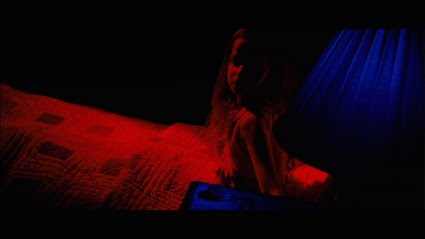
Amer is without a doubt the most minimalist and stylised approaches to the horror genre ever put on screen. But it’s also one of the richest and most detailed movies in the genre. Anyone with the slightest knowledge of European art house, the mystery of the Italian Gialli, the lighting of Mario Bava, the sensuality of Borowczyk, the daring mise en scène of Jean-Luc Goddard, to name a few will undoubtedly fall in love with the many nods, homage’s and direct referents to the many movies that dominate the visual style, narrative and tone of Amer.

Amer tells the tale of a woman, Ana, in three stages of her life, [Casandra Forêt, Charlotte Eugène Guibeaud & Marie Bos] as a child where the death of an elder haunts her and set’s demonic ghosts at play, her adolescences, where budding sexuality torments her as she comes of age and tries to fins her place in her new body, and finally the adult Ana coming to grasps with her memories of childhood and the traumatising experiences that she had.

A fascinating aspect of Amer is the minimalist dialouge. There are no long scenes of dialogue or hefty monologs; instead the restricted discourse pushes forth to suggestive imagery that drives the narrative forth.

Symbolism and metaphors are a huge part of Amer and it’s discourse with the viewer. It’s in the colour schemes, it’s in the imagery, it’s in the unspoken dialogue, it’s in the juxtapositions - it’s everywhere. Where deliberate referents have been created, they in turn spin non-intended into play.

Amer plays like a checklist of your favourite Euro horror titles, especially witin the Gialli sphere. Dario Argento’s Deep Red and Suspria, Sergio Martino’s Torso and All the Colours of the Dark, Lucio Fulci’s New York Ripper and many more, are all movies that flash to mind when watching Amer. Something that obviously pleases an old genre hound like myself.
Then there’s that superb soundtrack - what a soundtrack! A mere six tracks make up the entire soundtrack to Amer - Bruno Nicolai’s La Coda Della Scorpione, Ennio Morricone’s Un Uomob Si è Dimesso, A. Celentano/E. Leoni/P. Vivarelli’s Furore and Stelivio Cipriani’s La Polizia Chiede Aiuto, La Polizia Sta A Guardare and La Polizia Ha Le Mani Legate. Six tracks, six classics, six friggin’ masterpieces that give further dimension to Amer and propel the narrative forth when the music bursts through the speakers. You know the movies and that sets you in a certain mind frame. Obviously these tracks are very determined choices to layer out the movie and indicate to what is happening. Each track holds a key to reading the movie. There’s thought behind placing a track from a movie about childhood traumas and sexually charged crimes alongside the images that enhance the experience. It brings an incredible depth to the movie.

Amer is also quite possibly the most sexually explicit movie that you will ever see without actually seeing anything. Yes, without seeing anything. This is a magnificent aspect of Amer, everything is insinuated, everything is amplified by sound and image, but you never see it. The second and final act all ooze sex. You can almost taste it in the air from the atmosphere this movie creates. Theme wise, Amer is all about life, sex and death, which is exactly how the three acts play out.

The first sees Ana coming face to face with death, hence realising the value of her own life. She struggles against the antagonistic forces of the “ghosts” in an attempt to save her own life. The act comes to a harrowing climax – no pun intended – when she interrupts her parents being intimate, their own way of overcoming death. A moment that scars Ana, haunting her for the rest of her life. I will get back to that in a moment.

The second act is the sex act. Ana has become a young woman. All men she encounters look at her from a voyeuristic standing point. We can easily read their minds; they all want her. This is also enhanced though the choices of imagery. Low camera angles, almost peeking up her skirt, the oral symbolism of “sucking on her hair”, wind blowing through her thighs... If you pay attention you will also notice how her mother [Bianca Maria D’Amato] sees her daughter as a threat. She constantly corrects Ana’s ways and when there’s a man on horizon, she evokes all her female attributes, becoming almost a woman and not a mother anymore – a mother with needs, lusts and desires which may not have been responded to in a long time – we see no father figure and the scene is secondarily about a trip to the hairdresser. In a way it’s the mother’s demonstration of power over the young woman, the young woman who obviously is still a child in her mothers eyes. The entire scene holds a feeling of that classic moment where a parent corrects their child from doing the same things that make up their own traits. Do as I say, not what I do…

The final act is the obvious climax/death act, in more than one way. Remember that the French also call the orgasm “Le petitie mort”. Pretty early on in this sequence Ana falls onto a tree trunk and puts her hand in resin. With the suggestive line of association that has been put forth so far in the movie, this resin is not too far from come, a climax symbolism in it’s own right. There’s the anticipation of coming full circle, we are back in the house where the mystery started, we are expecting the ghosts to come back, but instead we encounter a completely different kind of ghost, the ghost of fornication past. Also there’s the climax to the line of Ana’s story. Where we expect her to fall victim, things take a completely different path. Pay attention to the closing scene, it’s a compact concentrate of the three main themes of the movie Life-Sex-Death and when the final climax is reached colour comes back to the world. The circle starts once again.

Freudian analysts would have a field day with this movie, one example being the cyclic movement that flows throughout the movie and the oral fixation, be it fingers, tongue or straight razor in the mouth of Ana. But getting into a brief psychoanalysis, AMer is once again a testament to the great power of guilt. Once again it rears it’s head and shows just how effective it is. As a child Ana interrupts her parents having sex. Her mother is crying a trait that a child will read as pain or sadness. Therefore Ana can’t be intimate without feeling sadness or pain. Also the frightening ordeal before she disrupts her parents – the blasphemy of stealing from a dead person, the horror of having ones life threatened, and the traumatising interruption – seeing mom crying as father [Jean-Michel Vovk] penetrates her – undoubtedly make it impossible for Ana to be intimate. Instead she get’s her kicks from stalking and claiming her own victims.

Her guilt of the childhood experience, disrespecting the dead, evading death, and interrupting life make her the hot mess she is. The life-sex-death circle is complete. Taking a Lacanic approach to the movie and his theory of “objet petit a” it could be fair to suggest that Ana is metaphorically murdering her father for causing that “pain” her mother experienced in the first act.

Without competition, Amer is one of the most visually stunning movies in a long time, but be aware - this isn’t a movie for a lazy audience, this is a movie that you need to pay attention to whilst watching. It may seem to be random imagery, but observing and taking in what you see will lead you to the conclusion. Much like watching early Giallo movies. You think you know where it’s going but you will never be prepared for the next surprise that comes your way. Not until the final moment will you be able to read the movie and gain the insight you are looking for.

Amer - suggestive, surreal and seductive, a honey-coated mindfuck – it probes deep and thrusts hard. With this movie Hélène Cattet & Bruno Forzani definitely have created a fascinating art-house genre piece that reaches the top of the scale. But the major question is where do they go from here?

Extras:
On the BluRay you can find the four short movies directed by Hélène Cattet & Bruno Forzani. These four short movies obviously play as a breeding ground for the style, and themes that later would become Amer. There's also the theatrical trailer and teaser.

Now tell me that the juxtaposition below was unintentional...


Monday, February 07, 2011

Sleazy Succubus - The Sounds of Jess Franco

Three is the magic number, so here's Sleazy Succubus – The Sounds of Jess Franco. My personal tribute to the wonderful movies of the one and only Jess Franco, his fantastic movies, casts and soundtracks.

Enjoy it, and make sure to grab the Fulci and Argento mixtapes if you still haven’t

This movie is dead to me...


Pulled this off Gorezone.net...

** Tom Cruise wants AT THE MOUNTAIN OF MADNESS: During promotion for SANCTUM, James Cameron was asked whether Tom Cruise has signed onto Guillermo del Toro's big screen adaptation of H.P. Lovecraft's AT THE MOUNTAIN OF MADNESS which Cameron is producing. Cruise and James McAvoy have been rumored for the lead role in the film in the past month, a claim McAvoy recently denied when he was asked about the project.

As for Cruise? Cameron told MTV News "Tom does want to do the picture. I don't think we have a deal with him yet, but we're hoping to get that closed soon. Guillermo is madly working on a new draft of the script. Hopefully we'll be shooting by June or July." del Toro and his writing partner Matthew Robbins penned the screenplay back in the very late 90's and the pair have been tweaking every now and then ever since. (thanks to DarkHorizons.com)

This movie is dead to me...

I love Lovecraft, I love Guillermo del Toro's work, I even had some breif e-mail contact with him a few years ago when researching a gothic horror & Lovecraft segment for The Ministry of Fear, and then his name popped up when I visited H.R. Giger at his home in Zurich. It was Giger who told me he had met with Del Toro to discuss AT THE MOUNTAINS OF MADNESS.

To put it into context - Giger and I talked a lot about Lovecraft and the possible influence his writing had been on Giger, one of the angles to my interview with him. This lead us to discuss how he shared a Lovecraft interest with Dan O'Bannon who also was into the Cthulhu mythos and how Alien sprang from there... [That's the movie Alien, not Giger's Biomechanoids which where already there before Alien] ...and other Lovecraftian movies like John Carpenter's The Thing and At the Mouth of Madness, which obviously lead us to del Toro's "announced" movie.

I was giddy as a kiddy on christmas, and was so from then on. Somewhere inside me I found a satisfaction when del Toro walked off The Hobbit as I imagined that now he'd get himself onto the mountains of madness... but then the king of the fucking world Capt. Jim Cameron came onboard, and with the Giger-Aliens debacle in mind, it was a fair bet that Giger would be out...

But OK despite a terrible loss for such a promising paring of two of the most important visual minds in a hundred years - YEAH JUST IMAGINE WHAT THE HELL THAT MOVIE WOULD HAVE LOOKED LIKE! HOLY SHOGGOTH! - perhaps Cameron may be able to appreciate the craftsmanship of the artist that is Guillermo del Toro is after all, and theirs a chance that AT THE MOUNTAINS OF MADNESS could still come off being a del Toro flick after all...

But then this shit hit the fan...

No Fucking way. NO FUCKING WAY! With J.C. and Tom Cruise on this mission, it's gonna become a stinking turd of a flick. The one that makes me loose all faith in Guilermo del Toro. The one that alienates his fans. The one where he starts dancing to someone else's tune instead of following his own notes... because Cameron and Cruise are not equal to trippy, creepy, mindfucking visually stunning movie, but more synonymous with big, explosive, crappy, predictable, action garbage where Tom Cruise saves the world, kicks monster ass and leaves the source material raped beyond recognition. Get ready for smiley happy ending with group hugs for all surviving expedition members!

It's a lost cause. This movie is dead to me. Despite the probable Mike Mignola artwork for the poster, despite the funky effects and set designs and Doug Jones in all his wonderful creature suits, despite the supposedly confirmed participation of Ron Perlman... this movie is dead to me.

Perhaps they where all right when they said it was unfilmable, all I can hope for now is that del Toro proves me wrong.

Friday, February 04, 2011

Exorcism

Exorcism
Original Title: L’éventreur de Notre-Dame
Directed by: Jess Franco
France/Spain/Belgium (1974) 1979
93min, Thriller/Sexploitation
Distributed by: Extreme - WorldWideCinema


Jess Franco gets a lot of undeserved critique for making quick and dirty movies – technically too - and amongst the movies that get the most complaints are the Eurocine movies. It’s no understatement he made more “lesser” movies than “better” movies with Eurocine – but at the same time it’s also the studio that produced some of Jess Franco’s absolute finest moments. Such as the magnificently sleazy, depraved and violent Exorcism or The Sadist of Notre Dame or Demoniac depending on which version you actually get to see. This is one of Franco’s wildest, darkest and strangest movies, and a shocking, disturbing and outstanding tour de force of Jess Franco cinema.

Pulp author Paul Vogel – or Mathis depending on which version you are watching [Franco] is writes seedy, sensationalistic crime stories for The Dagger and Garter Weekly. His latest short, The Torture Chambers of the Inquisition, tells the exploits of a sadist who Vogel claims to be based on a real character, hence the absolutely authentic details - which the readers love! Office clerk Anne [Lina Romay], who also participates in the opening nightclub performance, works in the Venus Publications offices too. The meeting ends on a sour note, when Anne and boyfriend Raymond (or Pierre depending on which version you are watching) [Pierre Taylou] candidly without knowing he’s still in the hallway, mock Vogel.

Vogel stalks Anne and her friend Maria [Monica Swinn] going as far as renting an adjourning apartment with a view right into the two young women’s room. From his, room with a view, he get’s his voyeuristic kicks whilst oogling the two women and their lesbian lovemaking. It’s classic Franco voyeurism and wonderfully shot from an adjourning location, creating frames within the frame and presenting a metaphorical space between Vogel and his “prey” - a space soon to be closed.

Next Franco establishes the complexity of the Vogel character. He’s not only a man who gets pleasure from his voyeurism, he’s also driven by the compulsion to cleanse the women he watches, and he has to make someone pay for the sins. Vogel rushes down to the local bar, picks up a barmaid and after sloppily making out with her – or rather having a minor breakdown on top of her naked body – Vogel proclaims that he’s must exorcise the devil out of her… which obviously means she’s gonna’ die! It gives a dimension to the character, which may come as a surprise for haters, but it is there and it’s a fascinating character with more depth than most the generic shite produced today. I’ll get back to the complex character of Vogel in a moment.
This is where a subplot concerning Satanism, black magic and occult rituals is started off and then runs throughout the rest of the movie. The barmaid tells Vogel of a satanic cult that have invited her to a Black Mass, and Vogel is shoved gently towards the brink. It’s an interesting subplot and a useful one as the Satanism and occult obviously contrasts against the many religious paraphernalia and recurrent praying of Vogel’s world. As we know all about Vogel’s religious morale and mission to clean out Satanism and sin, it becomes a conscious provocation and we know that he will have to react to it. It builds an inner tension within the Vogel character, which soon will need a reaction.

Vogel sneaks around the grounds of a mansion and witnesses the Black Mass invoking a brilliant clash within the character. We already know he’s on a one man mission to clear the world of sin and sinners, so stumbling upon a cult of Satanists who not only perform a ritualistic sacrifice, but also where participants freely start sessions of heavy petting and later end up in one huge sweaty snake pit of carnal frenzy, is an absolute point of no return for Vogel. The cultists must die, and obviously he starts with the high priestess and her husband, one of the most violent and haunting moments of the movie.

There’s bitter irony to be found here. As we have understood the black Mass to be merely another act, we realise that Vogel’s “exorcism/sacrifices” of the cultists is unjustified. There is no real threat to “our/Vogel’s” religious foundation; hence the sacrifices are merely murders. His misinterpretation of the ritual, leads him into an accelerated frenzy of disgust. He commits his gory assassination of the Countess [Francine Nicolas] and the blood remains are what lead the cops to take their manhunt for a sadistic killer whose methods - according to one young detective - are identical to that of the exorcism ritual of the early inquisition. It’s another obvious religious reference, but also the jump-start of an investigation plot. But instead of going the traditional way, Franco mind-fucks us. We know all about Vogel and his mission, and at the same time Inspector Tanner [Olivier Mathot] and cohorts are not too sympathetically portrayed. It’s as if Franco is manipulating the audience into empathising with Vogel instead of rooting for the police force, as we know the “sadist”, have an insight into his complex character and compared to the inefficient police grasping at straws, Vogel is the most effective character.

As the second act introduces the “antagonistic force” of the police – yes they can be an antagonistic force, after all they are out to bust the leading character, Vogel, who in this case is a classic anti-hero type just like Dracula. Think about it, I’ve mentioned it before on this blog, vampire movies have a complicated problem, as the vampire; i.e. the classic monster – most often becomes the one we root for… the protagonist. It’s the same here, it’s Vogel we want to see more of and we want to see his sleazy killings go on for ever… well at least till he starts pawing Romay, then we will have had enough.

Following this suave manipulation, Franco moves into the final act, the one that will take us though to the climax. It obviously see’s Vogel “peeping” on Anne, committing even more murders, whilst Anne and friends all become increasingly paranoid and worried about the killer stalking Paris. It’s all a build of anticipation, as we kind of already know where it’s all going. Vogel has to encounter Anne and when he does it pure ecstatic Franco concentrate.

Having kidnapped Anna, Vogel rants about how she’s too is possessed by the devil, but at the same time he loves her and waits for the right moment to rid her of Satan’s evil influence. With his object of desire finally in his possession, he can’t just kill her off in cold blood, instead he keeps her chained to his cupboard and toys with her instead, and after all he is the Sadist of Notre Dame.

The culmination comes after Vogel is confronted by Raymond and Maria who put forward “proof” that Vogel is the killer, as the feel he knows too much about the killings, and it shines though in his pulpy writing. It’s no chance happening, it’s planted earlier on in the movie and it’s a fantastic beat that delivers. They further provoke him with the fact that they are going to have another black mass later that night. Again it’s a provocation that leads somewhere and it has consequences in the climax, a climax that rushes forth like a runaway train.

Opening in a fashion that is true Franco cinema - We take the voyeuristic gaze into a sexual torture scene where one woman dominates a second – and as the scene reaches its climax; the camera cuts away to show a room full of swanky audience members. Franco sets us down right in the middle of the audience, creating the illusion that we are one of them. It’s a trait that returns quite a lot in Franco’s movies.

We’re used to seeing Franco in bit parts in his movies, and we’re used to seeing him play shady, freaky and oddball characters too. But Mattis Vogel is almost a concentrate of all the characters he’s portrayed though the years. It’s a performance that is outstanding. Vogel is a fascinating character. He has some serious skeletons in his baggage, which are let out in portions along the narrative. The first hint at his background comes early on when Anne asks if it is true that he once used to be a priest. He writes explicit crime novels with a sadomasochistic angle, but he’s also a man of the clergy. It gives dimension to the character. As does the conflict in kneeling affront of his bible, praying to God and putting on his priest garbs only to turn around and savagely murdering the prostitute he picked up at the club. It’s also here his profound beliefs come to surface for the first time. It’s also where he exposes his secret of once being expelled from the church due to his extreme ways of dealing with sin and sinners… he’s not even a real priest anymore, and not accepted by his kind, he’s an outsider.

I usually claim that there’s one crown jewel of storytelling when it comes to creating a fascinating character, and the one thing that motivates their actions harder than anything else is guilt! Yes, guilt. It’s obviously Vogel’s catholic guilt that drives and motivates him to kill the women. The guilt over his voyeurism becomes such a burden that he must redeem himself, and what better than sacrificing the satanic sinners of the devil’s cult to God!

Exorcism is all about voyeurism, life, death and religion – the art of killing in the name of God - i.e., which I feel is an obvious General Franco metaphor if there ever was one. The cinematography by Raymond Heil is outstanding. There are quite a few shots that just linger on in long shots. Being accustomed to the effectiveness of Franco’s zoom I was on several occasions waiting for it to bust forth and catch a close up, but it didn’t it just hung out in the back of the room. Really impressive and completely unexpected. Not forgetting the entire kidnapping of Anne sequence, which definitely is amongst the finest ever seen in a Franco movie. Lighting, composition, pacing and even the editing bring it together unlike any other moment. This could be the one single moment that could define the greatness of Exorcism.

Exorcism has a great score by André Bénichou and long time Franco collaborator Daniel White - who originated from Yorkshire, England. Adding that to the mix, makes this a fantastic movie - Exorcism, one of Jess Franco’s most violent, sleazy and hands down most complex movies, a magnificent piece of trash cinema when its at its best.


Image:
16x9 Widescreen

Audio:
Dolby Digital Stereo 2.0, English or French dialogue, Dutch subtitles.

Extras:
A really spartan release, and it’s painfully obvious that I’m going to have to start digging into my pockets and get the Synapse releases as I’m guessing they are completely uninterested in sending review samples of several year old releases to some bloke in the wrong region… This disc has noting to offer as far as extras go, not even a trailer. Just imagine what you could have done with "alternate versions" clips on this movie.

Sunday, January 30, 2011

Paula-Paula

Paula-Paula
Directed by: Jess Franco
Spain, 2010
Audiovisual Experience, 66min

It’s a well know fact that much of Jess Franco’s cinema is about voyeurism, forbidden urges, breaking taboos and weird beard wackiness. This may also be true in the case of the strange “Audiovisual Experience” Paula-Paula, but trying to make sense of this experimental short is a hard task which takes it’s time and will definitely polarize the fans.

Paula-Paula has me worried, confused and disoriented. I can’t make much out of it despite the guideline “inspired by Dr Jekyll & Mr Hyde by R. L. Stephenson” and several hours of previous Franco movies behind me. I can definitely get behind previous movies that give an impression of Jesus loosing patience and almost walking away from hence leaving the movies with a gaping hole as there is no real climax or conclusion to the narrative… but Paula-Paula goes completely off track even before it get’s started… and that’s a shame, because Jess Franco can do better.
Paula [Carmen Montes who also starred in Franco’s Killer Barby’s vs. Dracula 2002 which starred Viktor Seastrom (aka Peter Söderström) who I used to sell Franco import tapes to some fifteen years ago before he fucked off to Spain saying that he was going to find Franco – he did, and ended up working for the man on several flicks!] sits rocking in a corner, a detective, Alma Pereira [Lina Romay] has her guided out of the corner and into something that looks like an office, obviously someone’s apartment, and Pereira starts asking about the other Paula, whom the first Paula claims to hate. The detective asks if Paula killed the other Paula who replies that she has done so several times, Paula is a hard one to kill… An almost noir-ish tone is set into action, but each time the narrative starts to pick up, it’s intercut with mirrored split screens of “the other Paula” [Paula Davis] dancing… and from there one it just get’s lost in itself. Paula makes a move on Sergeant Meliton, before he scampers off and Paula starts a little dance for herself.

Unfortunately all the Franco style voyeurism is lost, as Paula on more than one occasion stares right into the camera busting through the fourth wall. It’s not longer voyeurism, as Carmen is looking right at me, the audience. I claim that voyeurism lacks interaction, it’s the unknowing of the observed that makes the one is watching because then it’s not voyeurism it’s exhibitionism and that’s a completely different bag…. Don’t even for a second think to yourself “yeah but Romay stared so damned hard through the fourth wall that she bumped into the camera in Les avaleuses (Female Vampire) 1973, so what are you talking about…?” because that iconic moment in Franco cinema is metaphorical for her she vamp character seducing the audience. In Paula-Paula it means nothing, at least not to me.

If you are a returning reader, then you know that I hold the greatest respect for Franco. I’m not just going to rip him to parts here; I love his work way to much for that. So much that the first moment it was possible I pre-booked and eagerly awaited the “audiovisual Experience” of Paula-Paula, and if my (and all the other fan’s) pre-booking in anyway contributed to helping Jess Franco complete Paula-Paula and secure distribution, then I’m quite content. But looking at the movie I want more. No, I demand more. This is Jess Franco, but no matter how hard I'm willing to argue, debate and defend his genius, I have a hard time getting behind offerings like Paula-Paula. For me this was a complete waste of time. Hardly ten minutes of Franco scripted “plot” - an introduction of themes - and the remaining fifty minutes tedious, and seedy video footage of two naked women squirming around on his living room floor – which may be good enough for certain fans, - doesn’t qualify for me. I’m wanting some context and texture to the platform of my sleazy viewing, this was just boring and as mentioned earlier, tragic. Jess Franco can do so much better than this.

It’s a difficult task reading Paula-Paula, and it’s taken me almost a year to get round to putting my thoughts in writing even if the conclusions are minimal from the few notes I found a few days ago. I wanted to see something that I’d might have missed in there, but sadly no, it’s still a pretty poor movie.

Sure, as I’ve pointed out in previous posts on Franco, a lot of his movies are linked and connected through intertextuality and in referring themes, plots, character, names and visuals. There’s a few small referents here, the obvious being Paula & Paula’s seedy nightclub act - even if it’s only performed on the floor of that living room and not in an actual seedy nightclub as it normally would - the character of Al Pereira, here as Alma, the Jazzy score, and the voyeurism trait that’s commonly found in Franco’s work is kind of warped and fails as I mentioned above. But if one really searches the narrative for reason and story then the answer is in there even if it is a pretty dodgy storyline to start with. The question of Paula’s death is posed early on, Paula denies answering, and enters a kind of dreamlike state. This continues as she and Paula dance and slither their way though out the movie… Well we never see a corpse, so in a way the Paula-Paula is two personas in one character – keep the Jekyll & Hyde text from the start in mind, and remember that that story is about man’s (or as here woman’s) inner conflicts with their good side and evil side. Dark haired Paula is riddled with guilt, she’s a blubbering mess at the start of the film, I’d say she’s the good one. In an extension of the movie, it’s safe to guess that she’s cured, as she during the narrative of Paula-Paula actually kills off that counter part which she can’t cope with, Blonde Paula, the temptress, evil Paula. The long tedious dance on the treadmill… well that my mates is the transformation scene!

The metaphor of a detective story is established when Romay asks if Paula killed Paula… She replies that she’s a hard one to kill, implying that changing ones character isn’t something done easy. But as we know at the end of the movie, there’s a climax to that arc in the death scene. A death climax, and in a micro perspective the detective story comes to a climax too. Yes Paula did kill Paula, but at the same time she frees’ herself, which is further implied by the text card at the end; And no one heard about Paula-Paula’s show ever again.

It could be that Paula-Paula is Franco’s most anarchic movie ever. Despite awards for lifetime achievements he say’s screw the system and I’ll make movie in my very own way until the very end. And If I want to make a movie right fucking now, I will! Almost as if he’s making a point of showing the industry that he doesn’t need them, and if he wants’ he can shoot a movie (or experiment – as that is what this is) in his living room on DV, with two naked women, long-time muse Lina Romay and a soundtrack right off the stereo if he wants…

…and he certainly can, because if that is the case, then I’m right behind this movie, or artfuck experiment or what ever he wants’ to call it. Viva La Revolucion, because Jesus Franco never stopped revolting against the system that denied him the opportunity to prove exactly what a true master he was.

But it can’t end here. No way, this can't be the final Jess Franco movie, it just can't! At times, even on his bare knees, Franco pulled off some fascinating and stunning movies, and I’ve always claimed that the majority of his flicks all have at least one scene that will stick and make an impression. Be it a composition, a glance from one of his actors or a pure surreal moment that one comes to expect from a Jess Franco movie, there’s always something in there that sticks with you.

Although all is not lost, the best thing with the Paula-Paula 500piece special release is that there are some fantastic moments in the presence of Jess Franco himself, and it starts with the introduction to the movie where he claims to have just completed the film half an hour ago… there’s what I’d call that anarchy again and perhaps one of the moments that makes me enjoy the disk overall despite not really enjoying the movie.

Oh and I have number 29 of the original 500 batch if you are interested.


Image:
16x9

Audio:
Spanish Dialogue, English Subtitles optional.

Extras:
Introduction, About the film and interview with Jess Franco where he shares his thoughts on film, music, women and the industry, and smokes another hundred cigarettes whilst lounging on his couch.

Thursday, January 27, 2011

Vampyres

Vampyres
(aka: Daughters of Darkness)
Directed by: José Ramón Larraz
England, 1974
Horror/Eroticism, 88min
Distributed by: Blue Underground.

It’s not a Hammer film, but it looks like one… It’s not a Jean Rollin film, but it looks like one… it’s not a vampire film, but it looks like one…

…it’s Spaniard José Ramón Larraz finest hour - Vampyres.


A shocking and violent initial attack that goes two ways, jumpstarts Vampyres, two women are feeding off a man, when a second off-screen character busts in and slays the two women with a series of gunshots.

A man, Ted [Murray Brown] arrives at a bed and breakfast, he checks in, and the night porter seems to recognize him from a previous visit…pretty soon he finds himself being picked up by a mysterious woman, Fran [Marianne Morris] and taken back to her simple abode – Oakley Court – where they get down and dirty. The next morning Ted is weak and finds a deep cut on his arm. Wandering the mansion he finally exits and comes upon a young couple who are “camping” in the near vicinity – this couple have been intercut with the action so far and I’ll return to them later. They tend to Ted’s cuts and send him on his way… but he doesn’t get far. Fran is awaiting him at the roadside and seduces him back to the mansion where Miriam [Anoushka] also has a “date” for the evening… another unsuspecting driver who has given her a lift. The women feed on their prey and finally end up engaging in a heavy lesbian petting session.
As the final act sets into motion, tension builds between Fran and Miriam due to Ted’s presence, the camping couple start to poke their nose into what is going on in the mansion and when a final “date” is invited to the castle the bloody climax comes rushing in at full speed delivering a gore filed and dark ending to a fascinating movie.

I love this movie, I really do. I’ve seen it several times through the years, and still enjoy it, as it’s a wonderful little piece that plays just like a mix of those three key words above, Hammer, Rollin and Vampires, even though not being any of them. I’ll get back to that later.

With a background as a comic book illustrator and fashion photographer, it’s no surprise that Larraz would get into movies and thank god, because Larraz brought some serious oomph to the otherwise pretty tame UK scene during this time period. It may look like a Hammer film, and as much as I love the Hammer films, Vampyres packs all the sexuality into one movie that is lacking from most Hammer films. It’s said that Larraz’s movies ”look” different to others due to his comic book background, but I don’t really see that Vampyres looks much more different than anything else, although it does has a magnificent atmosphere and sexuality that it almost gives off a potent odour of muddy landscapes, damp dusty castles and musky sex.

After having a minor success with his feature Symptoms (1974) – which actually got sent to Cannes as the official UK contribution – Larraz and his editor on Symptoms, Brian Smedley-Aston, clicked so well with each other that they decided to make a movie together. Smedley-Aston taking the role of producer and Larraz writing and directing what would become Vampyres. Shot in three weeks for just under 25.000 quid, the backdrop of Oakley Court gives the movie some great production value and the extra boost of magnificent set. And an obvious aura of Hammer lingers over the movie as they also used Oakley Court on many of their productions just as Amicus did with movies like Roy Ward Baker's And Now the Screaming Starts in 1973.

There’s a rather creative use of a subplot concerning the feeding habits of the girls. On more than one occasion we see police and ambulance taking care of the accident sites, and we the audience know what they are all about. It creates a threat for each driver that is stopped along the way. And also sets off something of an investigation plot that the "Campers" will develop further.
The red herring of Harriet [Sally Faulkner] and John [Brian Deacon] who for some daft reason have parked their caravan just outside the mansion is brilliant. It works for several reasons, and poses several rhetoric questions that add a layer to the drama, and also bring dimension to the narrative. What is the connection between Fran and Harriet? Fran reacts immensely strong when she stumbles upon Harriet during a stroll in the woods… Harriet is puzzled, but the question is how do they know each other? It’s questions that you have to take with you out from the film.
Several questions are posed throughout the narrative, questions that invite the audience to seek answers. What really happens in the shocking initial attack? Who’s point of view are we taking? Why does the porter at the hotel recognize Ted when he arrives on that dark night? What connects Harriet to the women of the mansion? And what does that ending really mean?

Vampyres had a rough time with the censors when it was released, which today may seem quite ironic as stuff like True Blood, Vampire Diaries and crap like that live off this shit – nudity and blood. But anyways back in the seventies UK this stuff was the censor’s nightmare and for each new release, the more of Larraz original vision was snipped… Thank god for “fan boy” distributors who take the time to restore movies to the way they where intended to be seen!

I started out by claiming that it’s not a vampire movie… well that’s a theory that could be right, but at the same time probably not. Although bare with me here, and you may see what I’m going for. The main body of the movie is indeed a film that toys with classic vampire themes. The women do seduce men and feed off their blood. But then there’s the several question marks that I keep coming back too… all of those “what’s” and “how comes”. With the movies last moments in mind, Ted awaking from a nap in his car and a real estate agent showing the empty mansion to an elderly couple who ask him about the “legend” of the place – there’s a final question concerning the narrative we have just seen unravel…. Did it really happen? Well no, in my interpretation of the film it didn’t happen, well at least not as the erotic vampire story Ted thinks he’s participated in. Instead what has happened is that two ghosts seduced him. Two ghosts who wander the countryside living out their revenge for being killed in that opening sequence. The legend that the estate agent and old couple wanting to buy a mansion – much like a scene found in Jean Rollin’s La Morte Vivante (The Living Dead Girl) 1982, concerns the bodies of two young women that where found in the mansion some years ago… Making sense of his drunken fantasy, Ted puts the two ghosts into in an erotic vampire setting.

Murray Brown previously portrayed Jonathan Harker in Dan Curtis magnificent Bram Stoker’s Dracula 1973 - the one with Jack Palance, the year before starring as Ted. It’s interesting as Ted definitely holds a lot similarity to the characteristics of Jonathan Harker, even if he’s not quite as driven as Harker. In an entertaining way it’s almost like an alternative Jonathan Harker that takes a different path, a path that leads him into a surreal addiction. Because that is a possible answer to what has been going on. Ted has obvious traits of an addict. He goes through withdrawal, he’s detoxing and when he wakes up in he car at the end, he’s clean. He may be dazed and confused, but he’s clean and had some pretty surreal erotic dreams along the way.

Image:
Widescreen 1.85:1

Audio:

Dolby Digital Mono, English dialogue,

Extras:
Blue Underground have given it all they can with this one, which is filled with loads extra features. International Trailer, American Trailer, image gallery’s Return of the Vampyres: where both Anulka and Morris talk about their time on set, about the movie and what they have been up to since then. A lost scene, gallery of Glamour shots featuring Anulka, Larraz biography and not to forget the great audio commentary with Larraz and producer Brian Smedley-Aston, who certainly have some hilarious stories to share on the movie.


Disney Star Wars and the Kiss of Life Trope... (Spoilers!)

Here’s a first… a Star Wars post here.  So, really should be doing something much more important, but whist watching my daily dose of t...