Wednesday, August 31, 2011

Burn Witch, Burn

Burn Witch, Burn
Original Title: Night of the Eagle

Directed by: Sidney Hayers

UK, 1962Horror/ Occult, 90min.

Distributed by: MGM MoD.


There’s something about old English movies with occult themes that make me think of my late grandmother. She was a true, believing Catholic who went to church on any given occasion and she used to read Dennis Wheatly pulp novels. I find it to be no coincidence that she read Wheatley novels as he frequently dabbled with occult and satanic themed stories. Needless to say, these were stories where good won over evil – which is most likely one reason why she read them. I’m quite sure that she rarely watched movies that used the same good fighting evil with occult themes, but I’m sure she would have got the same thrill from them if she had seen one.

Which brings me to Burn Witch, Burn, a good old fashioned English horror movie that almost naïvely tells it’s story of good vs. evil, deception amongst friends, and how mankind once again is forced to open their eyes to a wider picture.

Burn Witch, Burn starts with a warning of an black magic read over a black screen… a warning of tampering with evil… and then a delightful chanting as the narrator dispels the evil powers that may spill forth from the movie about to start. This goes on for almost three minutes before the movie actually starts going. It’s an effective opening, and definitely something you never would see in today’s genre cinema. Today it’s all about wham bam thank you monster man, and, get the adrenaline pumping.

Scottish director, Sidney Hayers, also directed the somewhat classic Circus of Horrors 1960, and had a lengthy career as director of TV serials such as The Avengers, The Professionals, Enid Blyton’s The Famous Five and later Knightrider where Paul Frees supplied the voice of supercar Kitt… this is of course only interesting as Paul Frees also read the narrative introduction to Hayers Burn Witch, Burn decades earlier.

The Quick fix for this movie is that it tells the tale of Peter Wyngarde [Norman Taylor], a university professor who one night after the customary game of bridge with his colleague Lindsay Carr [Colin Gordon] and wife Flora [Margret Johnston] has the shocking revelation – after a lengthy snooping around his wife’s unmentionables drawers – that his wife Tansy [Janet Blair] is Witch, seriously into Black Magic.Being the man of logic and science that he is, he has her throw all her artefacts on the fire, even the small photograph that she has of him in her locket…Yeah, you guessed it, the next day accidents start to happen around him, a female student who previously loved him, accuses him of violating her, his life is threatened, Tansy falls into some odd trancelike state – and back again.Slowly but surely dark forces close in on Norman, and pretty soon he finds himself face to face with the sinister forces he initially proclaimed don’t exist. And he’s had more of a change in character than you’ll find in a lot of today’s genre movies.

Burn Witch, Burn is more of a drama with occult themes, than a straight forward horror flick, which in all honesty is how genre films where in the sixties, early Hammer Horror, and Psycho, 1960, shifted the way these movies where made, Amicus where just getting started and it took a few years for the penny to drop all the way and horror return to the screen as the man theme in the narratives.But the framework is there, an opening in the ordinary world. Establishing shit, and what life there is like. Bridge nights, colleagues, the family unit and their relations to each other and their friends… The shift in balance as Norman’s world starts to change, and he has to move from unbeliever to believer.

Norman the Sceptic! One of the most effective tricks in horror film. Have someone be completely the opposite of what the story will be and gently shake this person into believing. “ I Do Not Believe!” are the first words spoken in the movie and very much the anti thesis of where Norman will be when the movie ends. It makes the unnatural horror of the movie more acceptable for the audience as we naturally identify with the non-believing character. We too know there’s no such thing as black magic and can easily identify with Norman… or do we? This is how you gently move an audience into the world of horror unleashed, because if he has to believe, so do we. And despite the somewhat shoddy Deus Ex Machina ending, the movie does serve justice and end with the question Do YOU believe? most likely propelling uncomfortable questions into the heads of patrons to ponder as they left the cinemas back in 1962.

Being based on a short story by Fritz Lieber Jr. – Conjure Wife, which had been adapted previously as the Lon Chaney Jr. vehicle Weird Woman 1944, an episode of Moment of Fear 1960, this one, the comedic approach as Witches’ Brew 1980 and it’s rumoured that an adaptation is in development now with a 2012 release planned – although Burn Witch, Burn is the one to stand out as it has a screenplay co-written by the legendary Richard Matheson.

Burn Witch, Burn is an enjoyable movie, overall good performances, and a satisfying plot. I have had the movie poster in my possession for a very long time – a poster which obviously is far more tantalizing and suggestive than the movie - but I bought it in a spontaneous moment thinking that it was a movie version of A. Merrill’s fantastic pulp fiction horror Burn Witch, Burn. Obviously it isn’t an adaptation of that story, but still a decent, entertaining piece that just goes to show that special effects – even though this one does have an eagle attack effect where wires are painfully visible – are not everything and just how far a little really can go.


Image:

16x9 aspect Ratio.


Audio:

Dolby Digital Stereo 2.0, English dialogue, no subtitles.

Extras:

Theatrical trailer.


Here's a few minutes of Janet Blair in action for your entertainment...

Sunday, August 21, 2011

Dylan Dog: Dead of Night

Dylan Dog: Dead of Night.
Directed by: Kevin Munroe
USA 2010
Horror, 108min
Distributed by: 20th Century Fox

With myself as a reference point I’d say that genre fans are conformists and pessimists. We do not want anyone fucking around with our classic movies, we do not want updated adaptations of our favourite novels and books, and we most certainly do not want our favourite comics brought to life on the silver screen. Yeah, we will receive the announcements of most of the above with open arms and possibly even do a little happy jig when we first read about this or that being made – or remade – for the big screen… but before it’s out there we will turn sour and put up out guard, preparing ourselves for disappointment. That optimistic flams slowly simmers down to a pessimistic grudge… and it’s quite understandable too as most of “the above” do end up being bad movies, lifeless adaptations or complete changes of the content that drew us to the source to start with.

Kevin Munroe’s Dylan Dog: Dead of Night is a movie that does – and will -separate the fans. On one side those who think it’s one of the worst movies ever made, and on the other’s those who take it for what it is. Then there are the fans in the camp I find myself… I want it the “project” to be good, but I’ve been let down so many times before that I kinda want to stay away from it… temptation – the bastard torture of all genre fans. Anyhow after sitting on my shelf for a few weeks, I finally popped the Dylan Dog: Dead of Night into the machine and I actually found it to be rather entertaining flick… heck even the wife stayed and watched it.
In response to the review I read just before watching the movie – well more of a rambling of non-topic words and bollocks, claiming, “We didn’t need another remake of Cemetery Man!” I’d really suggest that you get your head out of your megalomaniac ass and do some research instead. You are getting your characters mixed up, because there’s never been an adaptation of Tiziano Sclavi’s Dylan Dog previously… Francesco Dellamorte in Michele Soavi’s Dellamorte Dellamore (Cemetery Man) 1994 is a completely different character just like Federico in Giancarlo Soldi’s Nero 1992, even if they all inhabit the same universe.

Although I would challenge anyone familiar with the comic to watch Dellamorte Dellamore and not think of Rupert Everett as Dylan Dog, being that he was the main inspiration for the cartoon characters look. For a long time this was the only “Dylan Dog-ish” movie we had, and therefore I can see why one would think of it as a Dylan Dog flick, hell even I do that. But now we have Kevin Munroe’s take on Sclavi’s source material and we have to move on from there… really we need to mates, it’s almost twenty years since that flick came out.

The movie takes a step away from the familiar world of the Sclavi comics – instead of living in London, Dylan Dog [Brandon Routh] lives in New Orleans, and a logic reason for this is given in the narrative, Groucho is missing, instead Dylan is assisted by a young geezer called Marcus [Sam Huntington] as the rights to Groucho Marx likeness. If you know the comics then this will not come as a surprise as even in the comic Groucho in between two issues shaved off his characteristic moustache and became Felix instead. Inspector Bloch is gone – although references to bonds to the police force “in a previous life” are given now and again, and even Dylan’s archenemy Dr. Xabaras is omitted from the movie. – although the two are seemingly tied into one character as Werewolf Clan leader Gabriel [Swede Peter Stormare making the usual weird performance one expects from him]. Instead we are introduced to a Dylan long after he’s resigned from being a “nightmare detective” and a plain old private dick sneaking around the bushes taking incriminating photographs to bust unfaithful husbands. When Elizabeth [Icelandic elf Anita Briem] approaches Dylan with a request to take on her case - the movies initial attack, which leaves her father slayed by werewolves – he declines at first and proclaims that he’s done with that part of his life. This is all motivated by a delicate subplot that runs through the movie and concerns Dylan’s past love Cassandra – and if you know your Dylan Dog, you know that he never ever get’s to keep the women of his life.
Things take a turn for the worse and Dylan’s mate, soon to be partner in the company Marcus, is also mutilated by a huge beast thing which becomes the incident that forces Dylan to accept the call, don the red shirt, black jacket and get back in the game. The fun and games can now begin, and the undead can crawl out of their secret lairs to fight the last battle of the world, as mankind knows it.

People I work with get uptight when they hear the word “voice over”. At some point in time someone has read, or heard most likely, that using voice over is a sign of failing with your storytelling, and this information has seeped down the line without any point of reference… so people avoid voiceover, under some pretentious banner, and then end up making programs that are even more incomprehensible. Sure, storytelling guru and Hollywood script Doctor Robert McKee says that you should avoid voice over as that is a sign of bad storytelling and poorly written script, but it’s not a law, it’s not a rule, and it’s definitely not a truth. How would you otherwise know who’s who in those introductions of characters and personalities in early Martin Scorsese movies - Mean Streets 1973, Taxi Driver 1976 and Goodfellas 1990], how would you know what was going on deep in the mind of Captain Benjamin L. Willard [Martin Sheen] in Francis Ford Coppola’s Apocalypse Now 1979, and how the hell would you know who William Holden’s Joe Gillis was and why he was face down in Nora Desmond’s [Gloria Swanson’s] swimming pool in the opening of Billy Wilder’s Sunset Boulevard 1950? Any tool is to your advantage if you use it in the right way!
Dylan Dog: Dead of Night uses voice over and it uses it in a playful way that is very reminiscent of the way Sclavi uses caption boxes – and thought bubbles - in the source material. At times they even tell of the events to come in the next scene, which gives a pretty interesting driving force to the action ahead. I liked this style and it works for the movie, and it also brings a modern film noir tone to the film. It’s also an effective way of skipping corners and rapidly building expectation.

Dylan Dog: Dead of Night is a good enough movie, a fun and entertaining popcorn flick in the vain of the Buffy the Vampire Slayer - True Blood - Underworld serials and even something reminiscent of Tim Burton and Guillermo Del Toro’s horror fantasy flicks – you will know what I mean when you see the film. There’s a dark tone to the movie – Dylan Dog is a melancholic bastard in the comics and even so in the movie despite a few laughs here and there along the way. Don’t get me wrong, it’s not a horror/comedy, Routh plays Dylan straight and stern, and Huntington’s Marcus brings the comedic relief as the quirky sidekick, but apart from that it’s horror all the way. The movie may lack the surrealism and brooding tone of the comics, but it holds a dark film noir style with a certain familiarity from the comics.

All in all I can’t really see why fans of Dellamorte Dellamore wouldn’t enjoy this outing. It’s certainly riddled with the same dark humour of that movie, and it’s filled with referents to the source – like the Groucho disguise photographs on Dylan’s wall, or the Marx Bros poster that hides his safe, Dylan’s clarinet and even the toy models that he’s building, also found in Dellamorte Dellamore. If you’d had put a young pre-plastic surgery Rupert Everett in the place of Brandon Routh, and had one of the Italian genre directors helm the movie I’m sure we would have praised it as a brilliant follow up to Dellamorte Dellamore… Perhaps Dylan Dog: Dead of Night is why Michele Soavi supposedly decided to have Francesco Dellamorte once again pick up his shovel and get back to work in what is rumoured to be a sequel to that nineties masterpiece of Italian genre cinema. Time will tell, and until then, I suggest you check out Dylan Dog: Dead of Night.

Kevin Munroe obviously know the source, respectfully making his own movie and going his own way. Which is a good thing, it may not be the most original movie, but Dylan Dog does come to life in a good way, the story is… well comic bookish, the effects are good, there’s a few decent scares in there and the movie does what it’s supposed to do. The movie looks top notch, the narrative rolls forth splendidly, it’s light on the gore, easy on the scares, never complicated, just fun and setting Dylan Dog against vampires, werewolves and zombies… well, what more could you ask for.

Image:
Widescreen 2.35:1

Audio:
English dialogue, optional English for heard of hearing or Spanish subtitles

Extras:
None, (bastards…)

Sunday, August 07, 2011

Kidnapped


Kidnapped
Original title: Secuestrados
Directed by: Miguel Ángel Vivas
Spain, 2011
Horror / Drama, 85 min

I think I just saw what might be this years “punch to the head” movie… Spanish flick Kidnapped is a right nasty bastard. Violent, raw, stylish and definitely one hell of rough ride.

Kidnapped tells the dark tale of a family who move into their new house only to have it invaded by three hooded men who take them hostage. There’s really no need to say much more about the plot than that simple line, as Kidnapped takes a home invasion flick, brings sadism and realism to the table and slowly builds towards a violent crescendo. It is a disturbing movie and it does affect its audience.

I really liked Kidnapped and it will undoubtedly be in my head with each noise I hear tonight. I like intelligent movies that work their way into my head and stay there for a while. Stuff that you don’t just shrug off like much of the popcorn horror that we spend time watching too. There’s nothing really wrong with popcorn horror I really like that too, but it never really gets to me in the same way as these kind of movies do. Home invasion flicks mirror my biggest fears. I once had an unknown woman standing in my living room some twenty years ago and that really freaked the hell out of me. Staying calm as I could – my girlfriend at the time, actually hid in our closet - until I got the strange woman out of the flat, called the cops and had a locksmith change the locks, I really never worked out the shock and horror I felt at the time. Deep emotions that always surface whenever I watch this kind of movie…

Several reviewers have pointed out that this movie simply is, that meaning there are no moral pointers or judgement stories baked into the movie. It just shows the impact of the assault in the most realistic way possible. Yes, this is true, but at the same time there are a lot of storytelling details that I find make this an interesting film.

There is an initial attack. The first scene is an initial attack; an attack that set’s the tone for the film. It set’s an external threat, and it can also work as a trigger for anticipation. When we meet the family, we may have this scene ahead of us… or not. It creates a subtle disorientation, which genre movies thrive off.

Scene two, where we are introduced to the family of Jamie [Fernando Cayo], Marta [Ana Wagener] and their daughter Isa [Manuela Vellés], introduces us to their world. It not only establishes their relationships – how their family triangle works – but it also explores the house as the camera moves from Jamie, to Marta to Isa and back again. Scene two along with scene three are the important scenes that create empathy for the characters. Marta and Jamie discuss how they should relate to their daughter, how they should relate to each other, everyday concerns are aired and we learn how Isa interacts differently with mother compared to father. We know them slightly the everyday discussions, concerns and thoughts they have creates an emotional recognition that helps us as an audience to empathise with them.

Scene three also delivers the unexpected shock of the invasion. It’s fast, it’s ferocious and it comes from out of nowhere and had me jumping high off my chair. The observing linear approach is seriously much more frightening than a non-linear discourse with edited shots of the three hooded men approaching the house would have been. From this moment on we are in the nightmare realm. No answers are given, and no remorse is shown. This is all about enduring psychic torture and the fight for survival.

There are still some interesting questions set to the characters… Scene eight poses the question of what action Jaime will take to stop the kidnappers, when the leader of the pack [Dritan Biba] offers him a loaded gun. Jamie is a man of high morale, and he obviously can’t use the gun. This will return to punish him later. Also there’s an interesting rift within the group of kidnappers as they bicker who gives who orders and show little respect for each other within the band. It’s an interesting trait that later will come back to punish the intruders, and obviously something that Biba has concerns for as he reacts pretty harsh when the two kidnappers still in the house don’t answer the phone when he calls them. It’s almost as he’s terribly aware of the rift, which will shatter their constellation later on.

Technically Kidnapped is a artistic wet dream. Handheld camera to give an documentary authenticity – a classic trick like writing “based on a true story” at the start… luring the audience into a certain mind-set. Long scenes - only twelve of them all in all - which also add to that realism, as there’s no cut aways to effects or reactions. What you see in frame is what you get. The cinematography of Pedro J. Márquez is stunning; dark and haunting, often relying more on the dark than the light. Twice split screens are used to drive the narrative forth, once – in scene 7 to show what happens both within and outside a closed room, and in scene 11 which culminates in an awesome moment when the two feed’s meet. The meeting of feeds leads to a crescendo of strong emotions that lifts the movie high on euphoric release before crashing down into the dark depths of the devastatingly grim ending.

Kidnapped is an impressive and haunting film,  but I have a small problem with the ending. Not really the movie ending in its self, but the almost mandatory ending that these films are winding up having. The endings of movies within this little niche are turning into traits. Traits, which unfortunately are making these movies somewhat predictable. I knew before watching that Kidnapped would have a dark, nihilistic ending, but these grim endings are beginning to become something of a norm which takes something from the movies and makes that last punch lack somewhat in sting. It's becoming convention and trait. But then, they almost always slap on the quirky music as the last body falls to the ground and the end-credits roll... Please. Don’t spoil a hauntingly dark moment with a silly pop song as this comes off as ironic, or even as a laugh because "it was only a movie" or worse that the movie never was intended to be quite this dark. It disappoints me. Especially when there’s been no comic release what so ever throughout the rest of the flick.

Never the less Kidnapped is an intelligent movie. A dark and haunting masterpiece to say the least. A horror movie for adults, and one of the most disturbing genre flicks this year! Place it along the lines of David Moreau & Xavier Palud’s Il’s (Them) 2006, Alexandre Bustillo & Julien Maury’s À l’intérieur (Inside) 2007 - with which Kidnapped shares producers, Bryan Bertino’s The Strangers 2008, or even James Watkin's Eden Lake, 2008 and Pascal Laugier’s Martyrs 2008. That's the kind of raw punch to the head this movie brings. It’s a nauseating rollercoaster that shatters the safety of nuclear family and all the values we hold sacred there in, and although it may be predictable at certain moments Miguel Ángel Vivas has taken it in the right direction, and the space between hope and despair are perfectly balanced before peaking on either side of the scales. It is a rough movie; a movie that certainly doesn’t take any prisoners and it will get into your head.

Here's a trailer, but you really should stay away from trailers for this movie as they all expose way too much. Just see it.

Saturday, August 06, 2011

The Resident

The Resident
Directed by: Anti Jokinen
USA/UK, 2011
Horror/Thriller/Hammer, 87 min
Distributed by: Nordisk Film

I, like many others, did a little happy jig as I learned the infamous Hammer Studios was rising up from the dead. Then the concern that they wouldn’t manage to keep that atmosphere, vibe and style that was Hammer started to set in and it suddenly felt like it may have been a real crap idea after all.

Rumours flourished, movies where announced, facts stated and only time would tell if Hammer would rise from the flames or simply poop out a few turds and sink like a brick to the bottom of the sea of shame.

After seeing a couple of their still quite small output, I’m going to go on record and claim that this is a Hammer which in some ways equals what they had going for them forty years ago, when they took the world with storm and became the stuff of legends.

The first movie to be released by the resurrected company was Finnish born Anti Jokinen's The Resident, starring Hillary Swank and Jeffery Dean Morgan. Then there’s the big hook, which should appeal to all fans of Hammer Horror, the grandmaster of the all, Screen Icon Sir Christopher Lee also holds a part in the movie. It’s an ingenious move of Hammer to bring Lee on-board, because there are almost no words to explain the signals this sends to fans. If Lee is there, then it’s for real.

The Resident sees Swank – who I don’t really like at all, which was my main problem with the film – as young nurse Juliette. She works long, late shifts and within the first few minutes we see her save the day as she get’s in there and saves a patient with a heart condition – full with open heart surgery like moment and stapling together the injury. This obviously starts to create the character Juliette, she’s a no bull shit girl and she has no fear of getting her hands dirty to do her job.

She’s also in the midst of searching for her own apartment – which we later learn is s due to moving to N.Y. to live with her boyfriend Jack [Lee Pace], only to have him be unfaithful to her in their bed – which brings her to Max [Jeffery Dean Morgan] and his beautiful large building where there is an apartment available… This is a huge old style apartment which definitely makes an avid genre fan think of movies like Polanski’s Rosemary’s Baby 1968, The Tenant 1976 and even Michael Winner’s The Sentinel 1977. Although this movie goes a completely different way in the later half, it does hold a great gothic vibe with trick doors, peepholes, two-way glass and secret rooms behind the walls of the apartments.

Half an hour in, act two presents a rush of insight that will run shivers down your spine. What we have thought be a chance meeting that will lead to a stalking ex-boy friend – or some satanic cult preparation, with Lee as cult leader which I was hoping for – ends up being a stalker story of a complete different style. And a damned fine one too as this movie does go pretty far – as per usual for Hammer it never get’s too graphic, but it goes far enough to create that awesome buzzing vibe that comes with Hammer flicks. Needless to say, when all is revealed the movie kicks in on all pistons and the thriller turns to survival horror, and a damned tough fight to settle the score and bring balance back to the world breaks loose.

Obviously one could have requested more Christopher Lee, but the simple fact that he’s in it is good enough for me. The flick could have been more horror oriented, but being one of three flicks released by Hammer this year where all three use horror elements in three completely different stories them it’s still a pretty good movie, and has some pretty disturbing scenes packed in there.

One thing I really couldn’t stop smiling about afterwards – and yeah, it’s a real geeky thing, but for me as an old Hammer fan, it’s a very obvious nod to the older movies – and that was that the movie clocks in just over 85 minutes… and if you know your Hammer time, you know that the majority of classic Hammer flicks all clock in just over 85 minutes.

To sum it all up folks, Hammer are back kicking and screaming stronger than ever. To date the three movies released, Let Me In, Wake Wood and The Resident, have all been impressive in their own rights. Yes I was appalled by the idea that anyone remake Let the Right One In, but then I saw the movie, talked to John Ajvide Lindqvist about it and accepted it as the damned fine movie it is. But the atmosphere, vibe and quality of those movies have been top-notch, and the only ingredient that I feel may be missing is the cosiness of the old flicks. There’s something safe with the old Hammer flicks that I love. They are perfect late, late night movies to which one can drift in and out of sleep to as the movie plays on and on and on…

Hollywood better watch it’s back once again, because there’s a new kid in town and this one already has three contemporary classics under it’s belt. Long live Hammer the future is bright as the Phoenix lights up the sky!

Image:
16:9 Anamorphic Widescreen 2.35:1

Audio:
Dolby Digital 5.1, English dialogue, Swedish, Norwegian, Finnish and Danish subtitles are optional

Extras:
TBA

The Woman


People are already freaking out over the Lucky McKee / Jack Ketchum flick The Woman...


Well I'm gonna catch this baby as soon as I can, because Lucky McKee makes damned good movies and Jack Ketchum writes some damned disturbing stuff... and for fuck's sake, people have been fainting in cinemas and finding content to provocative since the Lumiere brothers filmed a goddamned train moving towards the camera, and a gardener got squirted in the face.

And I'll laugh out loud each time someone cringes, or throws a hissy fit about sick movies like this and others... yeah you know which ones I'm thinking of, because in the words of Jack Ketchum himself...

"If I didn't offend somebody, then I wouldn't be doing my job... this is about violence right?"

Although it's been way to long since we worked together, here's a link to a damned fine interview my mate Steve did with Ketchum back when we where running ConstructingHorror on a daily basis.


Enjoy and check out Aylmer's Unflinching Eye, as his latest post inspired me to make a European rip off of that post. :D

Wednesday, August 03, 2011

Re-Wind

Re-Wind
(Aka Celluloid Nightmares)
Original title: Abunômaru Ingyaku
Directed by: Hisayasu Satō
Japan 1988
Pinku/Horror, 64 Min
Distributed by: ShinToho (VHS) Oop, (Japan Eiga)

Static frizzles on a monitor… industrial post punk music plays on a repetitive loop… a fuzzy image almost shows a woman being assaulted by a masked man… a close up of an eye… an extreme close-up of skin… then a stylish, almost commercial, shot of a digital film camera spinning round ever so slowly…finally the camera rides a dolly past a metal wire fence, up to an abandoned refrigerator, where a severed arm holds onto a video tape.

The opening montage to Hisayasu Satō's weirdly disturbing Pinku Re-Wind is an unsettling but effective introduction into the sick, violent and gory world he takes us to this time. Following the montage, time is spent with a detective and his girlfriend Kiyomi Ito - who starred in several Satō films, such as the acclaimed Uwakizuma: Chijokuzeme (Unfaithful Wife: Shameful Torture) 1992, aka The Bedroom which I actually remember hitting art-house cinemas here in Sweden, and Kurutta Butokai (Kitami) 1989 -… Ito turns out to be a self proclaimed “crime hunter”, and takes up an amateur sleuth role in the movie as soon as the main characters are introduced. The detective and Ito discuss the tape and finally get it off as she’s declares being turned on by the “snuff-tape” he borrowed from the evidence room for the night.

She becomes obsessed with the tape and starts her own investigation into the identity and origins of the contents… well at least that’s what we are led to believe to start with.

On the other side of town Akira works at VideoBox - a smut parlour where tapes are rented in the locale and taken to the booth of customers choice. For some reason the “UVT – underground video tape” has become one of the favoured tapes at VideoBox and even Akira has become obsessed with the woman on the tape. His lolita-ish sister taunts him for being obsessed with the tape, but being a Pinku movie, that doesn’t stop them from engaging in some taboo shattering incest together.

I have an idea that goes along the lines that the Japanese are so steered by tradition, respect and heritage which outwards, in public, makes them such a stiff and stern country that they let it all go wild in their escapisms, which may be why they have some of the most fantastic sub-genres of film, music, literature, comics etc.…

Kiyomi and Akira’s paths cross, and together they take up a joint venture to solve the mystery of the videotape. This mission takes them to Cross – a sinister TV producer who’s connections to the female clerk at VideoBox are soon to disclose a shocking revelation.

For each of his movies I see, I find that I’m becoming more and more obsessed with the films of Hisayasu Satō myself. I find them fascinating and addictive. There’s a darkness, perversion and cynicism, which almost comes out in a concentrated form throughout the average one-hour playtime. But there’s also a dedication to telling a story in there, which I find rather fascinating with the Pinku genre. The narrative and plot are just as important as the scenes of carnal content.

Being something of sexually depraved take on Michael Powell’s Peeping Tom 1960, Schumacher’s 8mm 1999, and the cult of the Hideshi Hino’s Guinea Pig movies, Shirô Yumeno’s Script is one of the darkest Satō ever put on film. After two lengthy segments of intimacy in the best Satō style, the movie practically wanders away from Pinku and into Nippon Noir as Kiyomi continues to investigate the tape. At the same time, an unseen antagonist is introduced when someone starts stalking her. I really liked the fact that instead of simply connecting random scenes of eroticism, Satō (or perhaps I should say Yumeno) weaves those few scenes together with the use of an investigation plot that completely draws me in – Satō movies usually do have some sort of investigation plot at their core to balance against the voyeuristic themes.

I become totally engaged in Kiyomi and Akira’s quest for answers, and the climax that ties all characters and arcs together is truly satisfying. There’s a dedication to the storytelling that I rarely find in eurotrash, which often feels like it uses the plot to randomly get to the next flesh wrestling session. Satō uses it the other way around, and at times the scenes of sexual activity gets in the way of the narrative – but with out the intimacy, it wouldn’t be Pinku, and then I most likely wouldn’t be watching it.

Re-Wind, like so many other Satō movies, delivers an interesting rush of insight at the end, which at least explains Kiyomi’s obsession with the tape. This is a moment that also establishes her as part of the Satō universe. Many of his characters are people who have been violated, abused or had some form of wrong done to them – like having your god damned arm cut of during a heavy session of underpants licking - and now are out for revenge, yearning for re-connecting with the violator, such as Kitami or Hitozuma Korekutâ (Wife Collector) to give you a few other suggestions.

There’s always an enjoyable level of perversity in Satō's movies, and thanks to an interesting paradox, Satō's inventiveness came up with some truly weird moments of kinkiness. Laws prohibiting graphic genitalia generated, what I’d definitely call a Satō trait, the weird practice of undergarment licking. Yeah, the licking of underpants and knickers is apparent in most of Satō's movies and in a certain way it more or less disqualifies the movie from being anything else than heavy petting. I must confess that it does almost become kinkier than graphic nudity and at the same time brings a strange comedic tone to the movies.

Undoubtedly one of Satō's most violent films, Re-Wind is dark, seductive and captivating. This one comes with my highest recommendation, and I know that this is a movie I will be returning to, and possibly even judging the rest of Satō's canon by.


Image:
4:3 Full frame, Video Source.

Audio:
Dolby Digital Stereo 2.0

Extras:
None.

Sunday, July 31, 2011

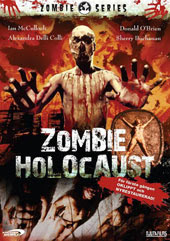
Zombie Holocaust

Zombie Holocaust.
Original Title: Zombi Holocaust
Directed by: Marino Girolami
Italy, 1980
Horror/Cannibals/Zombies
Distributed by: NjutaFilms/AWE

One of my very first orders from that old institution CineCity in Holland, René’s treasure-trove of video nasties back in the early nineties, was Frank Martin’s Zombie Holocaust on the old Video For Pleasure VHS release. Looking at the cover of today’s DVD and Blu-ray art, I can still feel the same giddiness every time I sit down to watch this film that I felt when I opened the parcel from Holland after waiting two, three weeks for a video tape to find it’s way into my post-box.

Just like some friends hold Andrea Bianchi’s Le notti del terrore (The Nights of Terror) 1981, or Umberto Lenzi’s Incobu sulla città contaminata (Nightmare City) 1980 as the ultimate totems of depravity and surreal zombie horror, for me it’s Marino Giriolami’s Zombie Holocaust.

A quick fix for a movie you should know by heart: Someone is stealing body parts of from a morgue. Lori Ridgeway [Alexandra Delli Colli – later to star in a most memorable and truly disturbing moment in Lucio Fulci’s Lo squartore di New York (The New York Ripper) 1982] isn’t only a doctor at the hospital where the human thefts have been taking place, she’s also holds a doctorate in anthropology, which leads to her joining forces with Dr. Peter Chandler [Ian McCulloch], quirky journalist Susan Kelly [Sherry Buchanan – later to pick up Caroline Munroe’s cape as Stella Star in Bitto Albertini’s knock-off/sequel to Luigi Cozzi’s Star Crash 1978; Giochi erotici nella 3a galassia (Escape from Galaxy 3) 1981], and George Harper [Peter O’Neal, who if he’d been on StarTrek would have been wearing a read jumper as the took off for the jungle] to investigate the island where the cannibalistic assailants are supposedly coming from. Dispatched by the Department of Health they head for the Moluccas Island to meet up with Dr. Obrero [Donald O’Brian], and pretty soon they are attacked by the blood thirsty cannibals that hide in the green jungle hell… but the cannibals are the least dangerous things in that jungle as they notice when slow decomposing corpses start to shuffle out of the jungle…

Being something of an intoxicated mix of Lucio Fulci’s Zombi 2 (Zombie) 1979 and Sergio Martino’s La montagna del dio cannibal (Mountain of the Cannibal God) 1978 – and lifting more than one beat, sub-plot and storyline from those two, the movie also owes a lot to Joe D’Amato’s Emanuelle e gli ultimi cannibali (Emanuelle and the Last Cannibals) 1977, and this due to the connection that Zombie Holocaust screenwriter Romano Scandarito also wrote Emanuelle and the Last Cannibals on which he worked with Fabrizio DeAngelis.

Producer Fabrizio De Angelis who worked his way up from being a mail man to one of the most important producers as far as Italian genre classics are concerned, not only came up with the story for this one, he also worked on Emanuelle and the Last Cannibals. Wanting to keep on running with the success of Fulci's Zombie, which he produced too, De Angelis, together with Scandarito came up with Zombie Holocaust – which would later be recut, re-edited and re-issued by Aquarius Releasing under the name Dr. Butcher M.D. (Medical Deviate) in the USA a few years later, with extra footage from a never complete movie shot by Roy Frumkes (Street Trash 1987). Anyone who’s been anywhere near Chas Bauln’s Deep Red books will have read about the movie as Dr. Butcher M.D. but the movie is undoubtedly at it’s best in it’s original shape, with the original score… but I’ll get back to that later.

Despite all the crap you hear or read about this movie, because this is one of those movies people crap all over, it is definitely not a movie for everyone but more a required taste, Zombie Holocaust does go about it’s storytelling in a correct way.

It does set up the premise, it does gives a reasonably logic reason for heading off to the island, and if you want to be really picky, then I’d go as far as saying that the whole first act is what scholars and storytelling guru’s refer to as “the inciting incident” Without Toran [Joseph P. Persaud] stealing body parts from the city morgue, he would never have tossed himself out of that hospital window plummeting to his death on the car park asphalt, Lori would never have seen his Kito tribal tattoo, she’d never have had to tell the story of her childhood on the Moluccas island, then there would never have been any mystery to uncover, and definitely nothing that would motivate Lori and Dr Chandler taking a trip to Dr. Oberon’s makeshift jungle laboratory. Zombie Holocaust even does a damned fine job of keeping the audience in on the plot. And don’t you just love dialogue along the lines “Patient screamed disturbed me, Performed removal of vocal cords… Will now administer a second injection to maintain patients conciseness…" Sadistic dialogue not even the makers of the so-called torture porn flicks could have come up with.

Trashy, sweaty and filled with fascinating gore sequences thanks to Maestro’s Maurizio Trani and Rosario Prestopino, this movie can not be ignored, nor ridiculed any longer, as it takes the two most violent genres and mashes them together in a fantastic cocktail of death unlike anything else. Zombie Holocaust is a classic piece of gritty, sleazy, exploitative low budget filmmaking that simply kicks ass.

As the movie goes into the last act, the most is made of the combined subgenres. Lori, now white goddess of the cannibals - told you it ripped off Mountain of the Cannibal God too, and that full body rock tableau that she fits perfectly also looks just like the one Ursula Andress slipped into in that movie – Anyway after an almost obligatory disrobing and initiation ritual segment - complete with remarkable rush of insight - Lori conjures up her loin clothed cannibals to take on the zombie army of Dr. Oberon. Now how the fuck can you not enjoy a movie like that?

You can’t talk about Zombie Holocaust without talking about the cast… It would be easy to imagine McCulloch flying on autopilot at this stage but being the bold Scotsman that he is, he just digs in and get’s cracking, blissfully unaware of just how many of those cheap and cheerful Italian flicks he’d go on to star in… and what a star he became! Alexandra Delli Colli, wife of acclaimed cinematographer Tonio Delli Colli never really made much of an impression on me as a leading lady, but she get’s the job done and never has a daring escape crosscut with a nude initiation been more illustrious – Although I do find her much more enjoyable in New York Ripper. I’d easily have seen Giriolami flip the roles and have Sherry Buchanan as Lori instead of Delli Colli because if there’s one thing I feel is missing from this movie it’s more Sherry Buchanan. Dakar in the part of jungle guide Molotto, is as McCulloch, more or less reprising his part from Fulci’s Zombi.

The original score that I mentioned before… Well the movie does have a great soundtrack by Nico Fidenco – complete with brooding keyboards, crooning quires and all the trimmings one expects from an Italian horror piece from this time period, but the only problem being that it’s not all that original after all it’s actually Fidenco's score to Joe D’Amato’s Emanuelle and the Last Cannibals. See how I mean that Zombie Holocaust owes a lot to that flick? But it works for the flick and I’d never want to hear any other music there, not even Walter E. Sear’s Moogy sounds, which even ended up on the US Version of Fulci’s E tu vivrai nel terrore - L'aldilà (The Beyond) 1981.

Finally I want to tell you about my favourite moment in Zombie Holocaust. No it’s not the corpse who blinks his eyes midst autopsy, it’s not the arm which goes flying off the doll after it hits’ the parking lot beneath the hospital, it not when Delli Colli get’s her kit off in the Cannibal cave, it’s not even the fantastic outboard motor to the face of the zombie on the beach scene… my favourite moment is a much more subtle and minor important, but oh so damned cool. After reaching the camp of Dr. Oberro, McCulloch and Delli Colli remorsefully tell him about the deaths of the rest of the team and a saturated atmosphere sets in. Then there’s a cut, cameraman Fausto Zuccoli pans down to the same location, the actors in the same positions and Dr Obrero tells them about a boat they can take to get off the island. Look at what they are holding… They are all enjoying a cold beer! In the midst of the apocalypse, McCulloch and Dakar sip a cold Carlsberg, and when he’s done he just tosses that metal can into the jungle! Fuck danger, Fuck jungle terrors, Fuck recycling. That’s on of my favourite moments, and if nothing else a great reason for you to go and watch the movie again – or enjoy it for the first time - right now.

Image:
Anamorphic Widescreen 1.85:1

Audio:
Dolby Digital 2.0. English Dialogue, with optional Swedish, Danish, Norwegian or Finnish subtitles.

Extras:
Original US and German Trailer, Trailers for other Njuta/AWE releases, Stills Gallery, Filmographies and a great short documentary/interview with Rosario Prestopino. A deleted scene, which I believe to be erroneously removed from the movie at some point in time when it started to resurface on DVD, because that mind-bending scene in an obvious murky autumn forest instead of the vibrant sweaty jungle used to be in the movie. It was in my Video For Pleasure video, and I'd like a dvd or Blu-ray where it was back in place again at some point in time.

Friday, July 29, 2011

The Sentinel

The Sentinel
Directed by: Michael Winner
USA 1977
Horror, 92min
Distributed by:


Wow. Sometimes you really do stumble upon “lost” masterworks and Michael Winner’s The Sentinel is just such a movie. I was watching Jurassic Park: Lost Word with my oldest son a few nights back and reacted to what a pale, unanimated and completely dead performance Jeff Goldblum gave in that movie. I decided to check out one of his older flicks as I think he’s brilliant in early stuff like Philip Kaufman’s Invasion of the Body Snatchers 1978, and Cronenberg’s The Fly 1986 (obviously not forgetting his very early small part in Winner’s Death Wish 1974). The Sentinel boasts Goldblum and Christopher Walken as the main names on the DVD cover art so that became the logic choice for the night… but those two guys, despite giving decent performances, are only seen in small supporting parts and instead The Sentinel turned out to be a real gem of modern horror story which really surprised me and undoubtedly has become one of my new favourite genre flicks.

Photo model Alison Parker [Cristina Raines] expresses a desire to live in an own apartment instead of moving in with lawyer boyfriend Michael Lerman [Chris Sarandon]. He’s not too happy about her decision, but following her father’s death he goes along with the split living arrangements. Alison’s neighbours turn out to be a real collection of eccentrics where Mr. Chazen [Burgess Meredith] throws a party for his cat Jezebel something dark is awoken in her. She has terrifying nightmares, which break into reality when the swinging chandelier and creaking floorboards from upstairs keeps her from sleeping. Slowly she starts to believe that she’s loosing her mind and perhaps that is the case when none of the strange neighbours she’s been interacting with for the past days actually live in the house… the only two who live there are Alison and a reclusive priest who’s sole purpose in life is to guard the gates of hell.


Michael Winner! What a brilliant writer and director he is. Not only did he direct one of the most badass vigilante revenge flicks of all time Death Wish, but he also directed this fantastic little horror flick. It has a great cast, and a ridiculous amount of actors that at one time had been major names such as: Ava Gardner, Burgess Meredith, Eli Wallach, José Ferrer, Arthur Kennedy, Martin Balsam, and the legendary John Carradine to name a few. Then there’s a bunch of actors who where just on the brink of breaking though such as Jeff Goldblum, Christopher Walken, Beverly D’Angelo, Jerry Orbach, Tom Berenger, and supposedly Richard Dreyfus has a cameo in an outdoor scene. It’s a movie that would make for a great drinking game, just pop a shot each time you see a familiar face.

As all great horror flicks that dabble with Satan, possession, gateways to hell etc., you have to have religion in there as an opponent or accomplice – Check out Manuel Carballo’s Exorcismus 2010 for a great use of how religion can be used as an accomplice to the evil that unfolds. That’s a twist I haven’t seen to many times.

What really stands out is that The Sentinel is a top-notch pulpy horror flick, which plays by all the right rules. It’s really no different than that one they all are judged by, William Friedkin’s The Exorcist 1973.

The flick starts with an initial attack. Not a classic one with a monster, but a “disturbance in the force” if you will and Monsignor Franchino [Arthur Kennedy – who get’s a lot more to do here than he did in Alberto DeMartino’s L’Antichristo (The Antichrist) 1974.] is sent out into the ordinary world. This is where the opening montage shows us several different clips of Alison and Michael. At her work as a model, and also where Jeff Goldblum is seen as her photographer, as they take romantic walks together, as they look through her portfolio, as they look for flats, she for her own, he for a one to share with her…this establishes the ordinary world which they live in. The world about to be disrupted.

Then the shift in balance, all told in a majestic way in which you rarely see exposition be delivered today. This happy go lucky woman who appears to have everything proves to have a dark secret. When returning to her childhood home after her father has passed away, she has a flashback of a traumatizing moment in her youth. When she walks in on her father being unfaithful with two different women, Alison runs to the bathroom and slits her wrists in an attempt to take her life…

That suicide, and others referred to though out the narrative, are all part of the key to the movie. This is like Exorcist, all about loss of faith, and what happens on the way back to finding it. Suicide is as you know the ultimate sin in the eyes of the church, and guilt can drive people to anything. Nothing is as powerful or useful in a horror flick of this kind as Catholic Guilt. This is what Monsignor Franchino latches onto when he meets a terrified Allison suffering from posttraumatic nightmares and an imagined death! Yes there’s a stunningly effective sequence right before midpoint where Alison’s nightmares see her killing a spectre – or was it a spectre, did she in fact kill someone? The guilt of that act, her adultery – again backstory exposition delivered brilliantly – and her many suicide attempts drive her right back into the arms of the church… which is exactly what Monsignor Franchino plan, and mission from that opening sequence has been all about. Monsignor Franchino even says it to Alison clearly in dialogue just before the third act starts that she’s lost her way and the guilt that breeds suspicions and deceptions will vanish when she makes peace and embraces Christ… It will make perfect sense once you see this magnificent movie.

I completely love how the movie slowly creeps from the normal to a world completely off kilter as the demons and Old Nick start to move in – and that’s without mentioning that really unsettling Beverly D’Angelo masturbation scene which will freak you out no matter what – It’s a great gentle shift in balance as we start to move into the supernatural world. The transition moves smoothly and working its way from the ordinary world to the supernatural in this slow fashion helps sell the illusion to the audience.

The supernatural plot takes something of a second seat to the investigation plot, or perhaps I should call it an investigation Sub-plot where detective Detective Gatz [Eli Wallach] and Rizzo [Christopher Walken] go after Lerman with the suspicion that he might be behind Alison’s state. Its though this investigation subplot that’s brilliantly used to lay out exposition, as every time the detectives are on screen, they tell us of something of importance, either to clearly or to dig into someone’s’ backstory and that helps explains certain parts of the narrative.

And you never make a movie like this without filling the piece with religious metaphors, sinister twists and red herrings. The theory I had in mind was way off and surprisingly I fell for the oldest trick in the book when Winner started laying out false leads for me to pick up.

The last fifteen minutes when all is revealed and the sub-plots come to culmination are outstanding. The visions of hell are outstanding and a true delight of outlandish cinema. Winner used actual disfigured people in these scenes, which led to both him and the production receiving some harsh critique. But it was the right way to go, because the real freaks add an authenticity to the piece, and together with the climactic special effects – created by the legendary Dick Smith, who also created Regan’s transformation make-up in that other movie, and Albert Whitlock’s visual effects – come together for an unforgettable climax to an unforgettable movie that I’m ecstatic to have seen.

Produced, directed, screenplay written (based on Jeffrey Konvitz’s novel) and edited by Winner himself, The Sentinel is a movie you want to seek out right away if you like good old school horror with brilliant twists and an atmosphere that is right up there with the cream of the crop.


Image:
16x9 Widescreen

Audio:
Dolby Digital 2.0 Stereo, English dialogue, no subtitles:

Extras:
A really entertaining commentary track with Winner, the original trailer, biographies and a photo gallery.

Tuesday, July 26, 2011

Primal

Primal
Directed by: Josh Reed
Australia, 2010
Horror, 80 min
Distributed by: Njuta Films

It would seem like there’s a wave of interesting genre directors finding a way though the static from down under. Greg McLean’s Wolf Creek 2005, still packs something of a punch, Andrew Trauki’s The Reef 2010 is one of the best shark attack flicks in decades, and Brian Trenchard Smith is at least still making movies. Josh Reed’s Primal starts off pretty slow, but in the flip of a switch it becomes an aggressive competitor for global attention. And you should pay attention because this is quite thrilling ride that goes from outback Australia to the heart of fear via a little detour of Lovecraftian mythos!

A quickfix for Primal goes something like this: An unlikely bunch of friends follow anthropology student Dace [Wil Traval] out to the bush to look for some old cave paintings he needs to study for his doctorate thesis. The fastest way to the paintings is though a system of labyrinth like caves. Finding no empathy from Mel [Krew Boylan] who tells her to ”Get over it, it’s only a fucking cave!” Anja [Zoe Tuckwell-Smith] drives round the mountain meeting the rest of the gang on the other side. On their first night at their camp, Mel develops a fever and pretty soon she’s turns into a primal beast with fangs and attacks the rest of the group. But despite being at the top of the food chain, even Mel fears what dwells in the caves, something that obviously has been there long before the ancient aboriginal paintings that drew them to the location in the first place.

Several things made this movie click with me, and not only Warren’s [Damien Freeleagus] awesomely cool RIP LUX t-shirt! The pre-title sequence set’s two important factors. The cave painting origin – which also tells a tale of the cave and gives a warning – and furthermore establishes the genre – horror and sets the threat – the monster if you will… or at least what we will believe to be the monster for the next eighty minutes.

Following the credits, introductions are dealt with and after rapidly establishing stereotypes; I notice that several roles are tossed around to what is common practice. Here the jock has been replaced with Mel who acts as the dominant, sexually aggressive character of the group usually reserved for the horny sports guy. Already in the first scene she uses foul language in the shape of the “C-word” to alienate her from the two other females of the group, accessory cast member Kris [Rebekka Foord] and the leading lady Anja. It may seem as a small silly scene, but it’s going to be important in the final scene, which I’ll return to later on. Male characters really don’t have much importance, strength or stamina in Primal, which was a pretty fun angle to take. All men are mere puppets to the women in one-way or another.

After the introductions and arrival at the location, it’s established that Anja suffers from claustrophobia. There’s also an indication of a back-story where she’s been captive in an ex-boyfriends basement. Also in the dialogue there’s a second indicator of that strong female presence as Mel totally disses Anja and her claustrophobia despite Anja fainting and vomiting... Kris holds back Anja's hair and comforts her, but it’s pretty obvious from that moment on that everything is going lead up to Anja being in that small tight damp cave in the final fight.

And that final fight… well I found it to be somewhat of a fresh approach. Instead of going about it the way you would predict it would – that is rush to the end, fight the monster – use the cave in some way, defeat the monster and end credits – Primal takes something of an outlandish detour during the final act. Early on in her post-transformation, it is apparent that Mel, despite her animal state, is terrified of something within the cave. Small indicators in the shape of tentacles seeping forth from cracks and crevices in the cave establish a second threat, and if not even the “monster-beasts’” dare enter within, how the hell is Anja going to make it through. Letting the audience in on the threat before the character is a brilliant device and which made Alfred Hitchcock a household name all those years back. Pre Psycho 1960, he frequently presented the treat then the character in peril. He made Sabotage twice with the same device – Bomb under the desk, clock is ticking, protagonist walks into office knowing fuck all about the bomb under the desk… but we do. And as the audience we bite our nails in terror as the protagonist faces the unknown threat. This is the same device as Primal and instead of a bomb under a table, there’s that Lovecraftian being within the rock. I’m not going to say anymore, but damn did that spring out of nowhere, pack a real shocking vibe, and definitely lifted the movie in my eyes. I love movies which I think are predictable flip things around and come up with a fresh ideas or even unexpected “Elder Being” monsters impregnating women and pounding protagonists to the ground…

To wrap it all up, lets return to that little sequence in the opening of the movie where Mel uses the “C-word” and everyone more or less freaks out at how verbally aggressive she is. Well, the last word of the movie is the “C-word”, and in the way it’s used it refers to character development. The speaker has ventured from a pretty plain character with a phobia of tight spaces and passive actor to a bold, aggressive survivor who metaphorically takes the power of Mel in her last action and comment. It’s a great little arc and use of detail that ties it all together neatly. But the journey here wasn’t one that came in an instant like it does in many other generic horror flicks. Nah, this was a painful trip and there are a lot of obstacles to pass over before the Anja actually becomes the final girl. There’s several times when she attempts to take command and dominate, but fails, or can’t because it would be morally wrong – the movie does at times pose questions like “Could you kill a friend if it wasn’t your friend anymore?” and this is what creates dimension in the characters confronted with these questions. It is also what makes Primal stand out amongst the crowd and lift it’s head up above stereotypical actions and behaviour… and the tentacles of course.

A great looking movie – shot by John Biggin’s who previously shot Trauki’s Croc-shocker Black Water 2007, Primal is a genuinely scary and original fright fest, blending Darwinian survival with Lovecraftian elements and gives the old gender stereotypes a run for their money.

Image:
16x9 Widescreen

Audio:
Dolby Digital Stereo 5.1. English dialogue, Swedish, Norwegian, Danish, Finnish subtitles are optional.

Extras:
TBA.

Zombies: The Beginning


Zombies: The Beginning
Original Title: Zombi: La creazione
Directed by: Bruno Mattei
(Vincent Dawn)
Italy, 2007
Horror/Zombies, 91 min
Distributed by: Ritka Video

Oh Bruno, Dear Bruno, Dear Meistro Mattei… what a superb final movie you left for us fans of cheap and cheerful entertainment to relish. A magnificent piece of popcorn horror with some of the most diabolical dubbing in the history of film, some impressing awesome moments of Helicopters, Submarines and previous movies, and a plot that uncannily rings a bell in the back of my head… But I wouldn't want it in any other way, this is Bruno Mattei at his best, and again, this is a perfect last movie from one of the grandmasters of Italian horror. A grandmaster who never hesitated to borrow a few ideas or two from a fellow filmmaker if it would enhance the story he wanted to tell.

Zombies: The Beginning opens up with an impressive and heroically toned rescue where Dr. Sharon Dimao (Yvette Yzon) sole survivor and somewhat action heroine from the preceding movie Island of the Living Dead is hoisted up to a helicopter and safety… at least for now.

Picking up directly from L'isola dei morti viventi (Island of the Living Dead) 2008, Zombies: The Beginning kicks right in as Sharon transforms into a deadly zombie demon and tears the throat out of an unfortunate night nurse. With a jolt Sharon wakes from her terrifying nightmare and proclaims that she will never be free… true in more than one way.

Trying to put the events of that terrible ordeal behind her, she seeks refuge in a monastery. Some months later Paul Barker [Paul Holme] from the Tyler Cooperation approaches Sharon and puts forth a proposition that she helm an expedition back to the island of the living dead… Or rather a nearby island where they have sent a second expedition to investigate the samples - that's zombies to you and me mate - which they have taken from the Island of the Living Dead to the nearby location.

After a pretty effective search and destroy sequence where the platoon of special forces troops secure the facility, Dr. Sharon and the Tyler exec’s enter the building which soon reveals itself to be a research laboratory where zombie foetuses and semi dissected adult corpses are scattered about on operating tables. You know that they will realise they are not alone in there and pretty soon the zombie infested action explodes onto the screen.

Just like Bruno's RoboWar – Robot da Guerra (Robowar) 1989, which is in some ways a frame by frame reproduction of Paul Verhoeven’s Robocop 1987 and John McTiernan’s Predator 1987, or Terminator II (Shocking Dark) 1990 which is Mattei’s modulation of James Cameron's Terminator 1984 - Zombies: the Beginning is more or less a frame by frame reproduction of Cameron's Aliens 1986 - but retold with a zombie angle instead of the alien angle… or is it...

Zombies: The Beginning is a great movie that totally feels like the old Mattei classics – but looks like a Mexican telemundo… which I obviously mean in the best possible way. [It’s the crispy video vs grain thing all over again] But despite that it still packs a punch, there’s some splendid low-budget special effects – and I can not point out how much freaky Alien, Zombie, headshots and gore splashes there are in this wonderful movie - cramped laboratories and workspaces that induce seventies Doctor Who locations, snarling and grunting solders, bloodthirsty zombies, spectacular birthing scenes - yes you sure as hell haven't seen anything like this in a zombie movie before!

Time to answer the question you all are waiting for: Does Yzon’s Dr. Sharon Dimao holds up as an action heroine like Ellen Ripley or Sarah Connor? The answer is Hell Yeah! When the shit hit’s the fan and the executives hide safely behind their video monitors as the tactical unit is slaughtered by the alien/zombie creatures in the factory, it’s Dimao who steps up, saves the remaining troops and sets the agenda for what need’s to be done. And it happens just past midpoint, propelling the movie into the final third, delivering some new antagonists to the plot and revealing the true intentions of going back to the island. Global Cooperation’s with their sights set on new fields of weaponry sure as hell do suck, and that’s without the final act twist that will blow your socks off. Supposedly the movie was intended to be the second part in a trilogy, but Mattei passed away before the third was initiated. Mattei has obviously established Yzon as a heroine to rely on, and the final shots of Yzon looking out over the destruction is a very classic cliffhanger pose. It would have been great to pop part three in the machine and see where Mattei would have gone with the story. It’s also possible to read the ending as a homage to those nihilistic endings of the eighties movies, which more than often ended with a final attack presenting the end of mankind after all.

It strikes me that the most of the Mattei movies I’ve seen actually have pretty strong female protagonists. Zombies: The Beginning is no exception. Dimao is in no way a passive character, which she easily could have become in the male dominated cast of grunts. But she looks at ease with being an action hero, walks the walk and talks the talk. When staring death in the eye, she reaches for the closest weapon and delivers the classic “I have something I need to do.” line instead of doing a 180 and running. It’s the same in that board meeting early on in the movie. Instead of obeying the authorities, she gives them a bollocking and goes her own way. So could it be so that Bruno Mattei actually was a man who enjoyed strong female characters in his movies…? Think about journalist Lia Rousseau [Margit Evelyn Newton] in Virus (Hell of the Living Dead) 1980… she’s a pretty strong character, after all she get’s her kit off and walks right into that village of primitives in the midst of a zombie outbreak… Mother Vincenza [Franca Stoppi] in L’altro inferno (The Other Hell) 1981 is a rather strong character, yes an evil one – or is she really, she’s only looking out for her child, a mothers strongest emotions… Emanuelle [Laura Gemser] in Violenza in un carcere femminile (Violence in a Womens Prison) 1982, well if there’s a euro trash archetype for strong female who makes it out on top of each submission she find’s herself in then Emanuelle is she. Victoria [Ydalia Suarez] in Island of the Living Dead, well she goes down in a blaze of glory… You see, there’s more than just coincidence here, and I could easily go on giving you more examples but I’ll just leave the thought with you and let you explore that pleasure all for yourselves. So you plainly can see that Bruno Mattei is more than just a seedy smut peddler, but a man who actually held feminist values close at hand in his storytelling.

Recycling footage is part of Mattei’s game, I’d even go as far as saying it’s a trait. In Zombies: The Beginning, you’ll find not only footage from Island of the Dead, but also a decent portion of Crimson Tide 1995 is used, and as per custom, the aspect ratio is off. I remember an old VHS I had of Hell of the Living Dead where the inserted material was full screen and the original footage presented in a letterbox format. Good old glory days and definitely an ingredient to the charm and experience of Bruno Mattei movies.

Zombies: The Beginning is a perfect final Bruno Mattei movie. Not only does it ooze of the atmosphere, attitude and style of the movies that once brought him to my (and fellow Matteiists) attention, but it also stands as an example of how dedicated Mattei was to his art. Because never mind how cheap his sets, locations, effects where they work. In his universe they work, they add to the movie and they elevate it. God knows I’ve seen major big budget productions come out looking worse than Zombies: The Beginning. Bruno Mattei’s movies don’t demand anything from me, they don’t try to be clever or arty or stylish, they simply offer me ninety minutes of mindless entertainment that will take me away to an imaginary world, the perfect escape from the daily grind. And for that I will always love the movies of Bruno Mattei. Cheap trash made perfect, and for this Bruno Mattei will always be one of my favourite directors.

There’s a clip with Bruno at the end of the movie, which shows a frail Mattei joking with the cameraman in what possibly is the editing suite. A sad reminder of what a true trooper Mattei was, a man who despite staring death in the face continued to make low budget trash for us to devour. Because we love it and he loved it. Rest in peace Meistro.

Image:
Widescreen 16x9

Audio:
Dolby Digital 2.0, Czech Dub or English Dub with Czech subtitles.

Extras:
Nothing but a few trailers for other Ritka Video releases.

Disney Star Wars and the Kiss of Life Trope... (Spoilers!)

Here’s a first… a Star Wars post here.  So, really should be doing something much more important, but whist watching my daily dose of t...